You can earn money by scanning shopping receipts through apps that reward eligible purchase information. The returns are usually small, but ordinary shopping can sometimes produce an extra benefit.
This guide is for shoppers who want to understand receipt rewards without confusing them with a reliable income source. It covers eligibility, payment methods, privacy, and realistic expectations.
For a worldwide audience, location matters as much as the app itself. A service available in one country may not accept registrations elsewhere, even when its website is accessible internationally.
How Receipt Scanning Apps Turn Purchases Into Rewards
Receipt scanning apps collect information about purchases, such as products, prices, stores, and dates. Participating services use that information for purposes described in their privacy policies.
Some services support consumer research, while others work with brands on promotional offers. In return for eligible participation, users may receive points, cashback, gift cards, or other rewards.
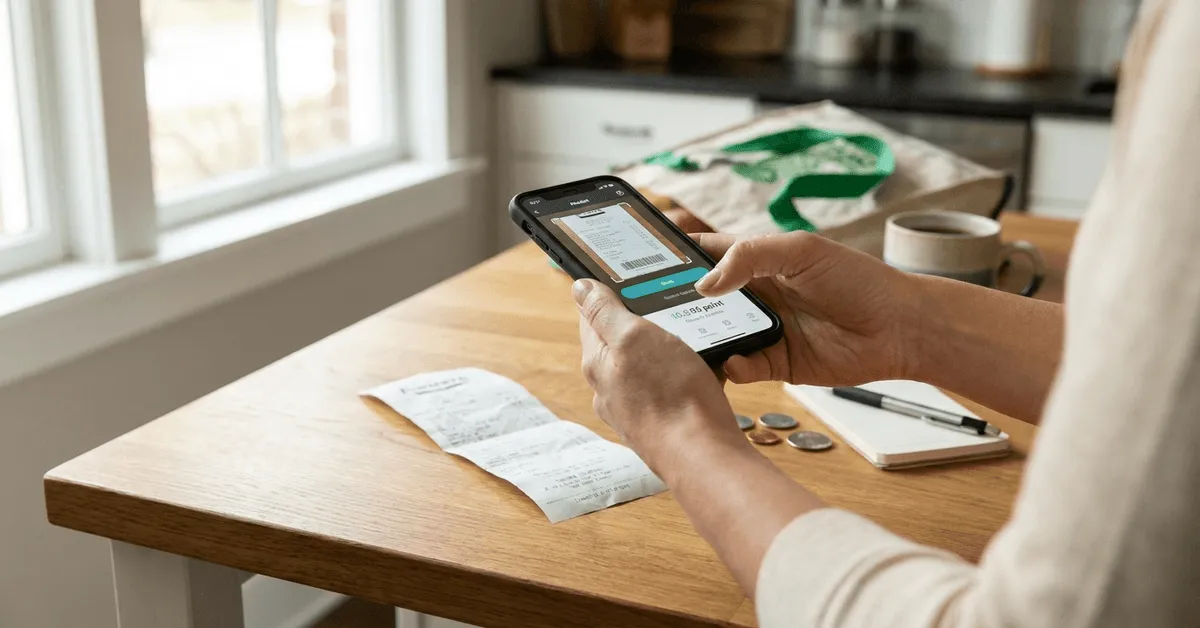
The scanning process usually involves photographing a paper receipt or submitting a supported digital receipt. Software reads the details, although unclear images may require additional review.
A successful upload does not automatically mean a payable reward. The receipt must satisfy the service's rules, and some offers require specific products, participating retailers, or prior activation.
How Much Money Can You Earn From Scanning Receipts?
The honest answer is that receipt rewards are usually modest . Your results depend on accepted receipts, available offers, shopping habits, reward values, and the time required to redeem anything.
As a purely illustrative example, 40 accepted receipts earning the equivalent of $0.05 each would produce $2. Actual programs may use points instead, and their rates can differ substantially.
Product-specific cashback can be higher than a basic receipt reward, but it comes with conditions. A larger advertised reward is not useful when it encourages a purchase you would otherwise avoid.
Monthly value matters more than an impressive-looking points balance. A practical comparison includes the redeemable amount, any extra spending, and the minutes spent managing submissions.
What Determines Your Actual Return?
- Receipt eligibility: supported stores, purchase categories, dates, and submission limits.
- Reward structure: fixed points, purchase-linked cashback, bonuses, or prize entries.
- Redemption conditions: minimum balances, available rewards, processing times, and restrictions.
- Personal costs: extra purchases, mobile data, subscription charges, and time spent.
Receipt Rewards, Cashback Apps, and Store Loyalty Programs Compared
These categories often overlap, which makes comparisons a little confusing. The useful distinction is whether a service rewards an eligible receipt, a particular purchase, or an existing store relationship.
| Program type | Typical requirement | Possible reward | Main limitation |
|---|---|---|---|
| General receipt rewards | Submission of an eligible shopping receipt | Points or other program rewards | Small returns and submission limits |
| Product-specific cashback | Purchase of a qualifying item under an active offer | Cashback or equivalent credit | Exact product and timing requirements |
| Retailer loyalty programs | Eligible spending linked to a store account | Points, discounts, or store credit | Rewards limited to the retailer's system |
| Consumer research panels | Ongoing reporting of qualifying household purchases | Points, vouchers, or other incentives | Participation requirements and regional availability |
A loyalty discount and a receipt reward may sometimes apply to the same transaction. However, reward stacking depends on both programs' terms, especially where coupons or competing rebates are involved.
Prize entries deserve separate treatment. An opportunity to win is not the same as money earned, so it would be misleading to count a possible prize as part of your regular receipt-scanning income.
Finding Receipt Scanning Apps in Your Country
There is no single receipt app that should be assumed to work everywhere. Supported countries, retailers, currencies, and withdrawal options can vary, and availability may change over time as well.
Fetch is one example associated with the United States receipt-rewards market. Its existence does not establish eligibility for shoppers elsewhere, so country and account requirements still matter.
Another example is Receipt Hog, which operates under its own participation rules. The official Receipt Hog website is a starting point for checking current service information.
Outside a supported market, local supermarket loyalty schemes or domestic cashback services may be more relevant. A familiar international brand is not automatically the most practical local option.
Regional Details That Matter Before Registration
- Supported country of residence and minimum participant age.
- Accepted retailers, receipt languages, and purchase currencies.
- Availability in the official app store for your region.
- Reward options that can actually be used where you live.
- Phone verification, identity checks, and any household account limits.
Regional restrictions are a reason to choose another service, not to disguise your location. False details or location workarounds can violate program terms and put an accumulated balance at risk.
How the Receipt Submission Process Usually Works
1. Registration and Account Setup
Most programs require an account with basic contact information and acceptance of their terms. Some also request demographic details to determine eligibility or support their consumer research activities.
Optional permissions deserve attention during setup. Access to email, location, or other information may support certain features, but the necessity and scope of that access differ between services.
2. Photographing or Connecting Eligible Receipts
A readable receipt generally needs to show the retailer, transaction date, purchased items, and total. Long receipts may require several images, depending on how the app handles its capture process.
Digital receipt support varies. Some services accept supported uploads or forwarded messages, while others use account connections; a screenshot alone may not satisfy the applicable submission rules.
3. Review, Approval, and Redemption
After submission, an app may approve the receipt automatically or hold it for review. Missing details, duplicate submissions, and purchases outside an offer's conditions can lead to a rejection.
Approved rewards usually appear in an account balance before redemption becomes available. A minimum cash-out threshold may apply, and processing times can differ by reward type and provider.
Which Shopping Receipts Are Usually Eligible?
Grocery and everyday retail receipts are common, but acceptance is never universal. Restaurant, fuel, pharmacy, online, and service receipts may receive different treatment within the same program.
Receipt age is another frequent restriction. A purchase that would otherwise qualify can become ineligible after the submission deadline, even when the printed receipt remains clear and complete.
Ownership and household rules also matter. Programs may limit submissions to purchases made by you or your household, rather than receipts collected from other shoppers or found near a checkout.
Refunds can affect previously awarded points or cashback. If a qualifying product is returned, the service may reverse the associated reward according to its terms and transaction review process.
Common Reasons a Receipt May Be Rejected
- The image is blurred, cropped, too dark, or missing required information.
- The receipt has already been submitted where duplicates are prohibited.
- The transaction falls outside the permitted submission period.
- The purchased size, variety, quantity, or retailer does not match an offer.
- The receipt has been altered or does not meet ownership requirements.
Privacy and Security: What You Exchange for Rewards
Receipt rewards involve a trade-off: you receive a benefit while providing purchase information. Even an ordinary grocery receipt can reveal habits, preferred stores, shopping times, and spending patterns.
A privacy policy can explain what information is collected, why it is used, and whether it is shared. Data retention, account deletion, and available privacy controls are also worth understanding.
Email-linked features deserve particular care because access may extend beyond a single receipt. The permission screen and privacy documentation should clarify the connection's scope and purpose.
Receipt scanning is not automatically risk-free simply because an app offers small rewards. A legitimate service can still involve a data-sharing arrangement that does not suit your preferences.
Warning Signs of Receipt Reward Scams
- Guaranteed high daily income for uploading ordinary shopping receipts.
- Unexpected requests for banking passwords or one-time security codes.
- Payment demands to release an already displayed reward balance.
- Download links that bypass trusted distribution channels without a clear reason.
- Unclear company details, inaccessible terms, or pressure to act immediately.
App-store availability and positive reviews can provide useful context, but neither guarantees safety. Clear terms, identifiable operators, proportionate permissions, and credible support channels matter too.
Making Receipt Rewards Worth the Effort
The strongest approach is usually the least exciting one: rewards attached to shopping already planned. A small benefit remains a benefit when it does not change your budget or purchasing decisions.
One or two suitable apps may be easier to manage than a large collection. More accounts can mean more deadlines, additional privacy exposure, and several balances that never reach redemption level.
A short weekly routine can help reveal whether the activity is worthwhile. Time spent correcting scans, reviewing offers, and handling failed submissions belongs in that assessment alongside the rewards.
Gift cards are not always equivalent to cash . A voucher for a store you rarely use may have less practical value than a smaller reward that directly offsets an ordinary household expense.
A Simple Way to Measure Value
A basic record can include receipts submitted, rewards redeemed, extra spending, and time used. Tracking completed redemptions rather than displayed points gives a clearer picture of the actual benefit.
For example, a $5 reward does not create $5 of savings if earning it prompted an unnecessary $8 purchase. The shopping decision matters more than the headline reward attached to that transaction.
Taxes, Program Changes, and Unredeemed Balances
Tax treatment depends on your jurisdiction and the nature of the reward. Purchase rebates, research incentives, referral payments, and prizes may not receive identical treatment under local rules.
Records of redemptions and related transactions can help if reporting questions arise. A local tax authority or qualified adviser is better placed to explain obligations than a general earnings guide.
Program terms may also allow changes to offers, redemption options, or point values. Expiration and account inactivity rules deserve attention because an unused balance is not the same as money received.
Frequently Asked Questions About Receipt Scanning
Can the Same Receipt Be Used in More Than One App?
Sometimes, but there is no universal permission. Each service sets its own submission and promotion rules, and an offer may prohibit combining its reward with another rebate on the same product.
Can Online Shopping Receipts Earn Rewards?
They can when a program supports the retailer and submission method involved. Order confirmations, shipping notices, screenshots, and final invoices are not necessarily treated as interchangeable evidence.
Do Receipt Apps Pay Cash or Only Gift Cards?
Both models exist, along with points and other incentives. Available redemption methods depend on the service and region, so an app described as a money-making tool may not offer direct cash withdrawals.
Can Receipt Scanning Replace a Job?
For ordinary shoppers, receipt scanning is better understood as a small supplementary reward activity. Returns are too limited and variable to treat as dependable wages or a replacement for employment.
Conclusion: Small Rewards Make Sense When the Costs Stay Small
You can earn money by scanning shopping receipts, but the real advantage comes from rewarding existing habits. The best result is a usable benefit without extra purchases, excessive effort, or unwanted data sharing.
For eligible readers interested in registering, the official Fetch website offers a direct starting point for reviewing the service and available sign-up options in its supported market.
The strongest measure of success is not how many receipts you upload. It is whether the rewards you actually redeem are worth your time, respect your privacy preferences, and leave your budget better off.