Earning cashback on fuel and gas purchases can reduce everyday driving costs without changing your routine dramatically. The challenge is knowing which rewards genuinely leave more money in your pocket.
This guide is for commuters, occasional drivers, and households comparing fuel savings across different countries. It explains how cashback works, what restrictions matter, and how to compare offers fairly.
A generous reward is not automatically a good deal. Pump prices, account fees, redemption rules, and borrowing costs can outweigh the benefit, so the most useful comparison starts with your actual spending.
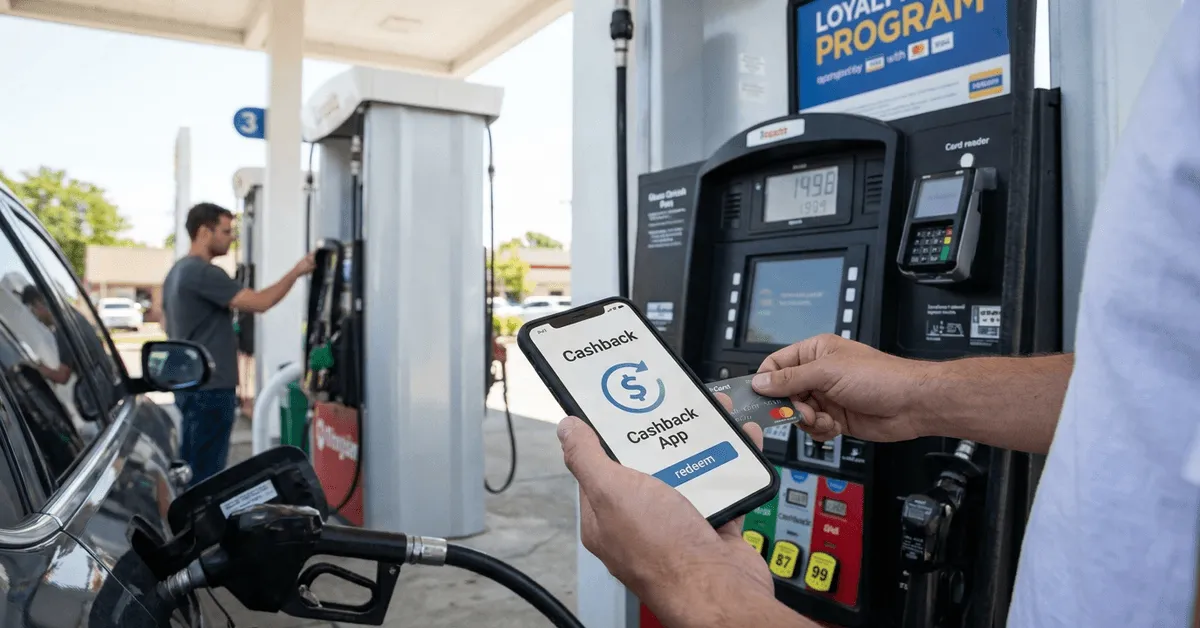
How Cashback on Fuel and Gas Purchases Works
Fuel cashback returns part of an eligible purchase through a payment card, mobile app, retailer account, or loyalty scheme. Depending on the program, the reward may arrive as money, credit, or redeemable points.
Some offers calculate rewards as a percentage of your purchase. Others provide a fixed amount per liter or gallon, which means their effective percentage value changes whenever the price of fuel moves.
The word cashback can also describe benefits that are not immediately withdrawable. A statement credit, store voucher, and bank transfer may have similar face values but different practical uses for your budget.
Cashback, Discounts, and Points Are Different
An instant discount lowers the amount paid at checkout, while cashback usually arrives later. Loyalty points add another step because their cash value depends on the program's conversion and redemption rules.
- Instant fuel discount: The eligible price falls before payment is completed.
- Statement credit: A reward reduces an eligible card account balance.
- Cash payout: Available rewards may transfer to an approved withdrawal method.
- Loyalty points: Accumulated points exchange for benefits under program rules.
The Main Ways to Earn Fuel Cashback
Cashback Credit Cards and Debit Cards
Some payment cards offer enhanced rewards at eligible fuel merchants, while others apply a flat rate to general purchases. Availability, annual fees, and qualifying categories vary by issuer and country.
Fuel cashback credit cards can suit drivers who already use credit responsibly and pay their statement balance in full. Carrying interest-bearing debt can cost substantially more than the rewards earned.
Debit rewards avoid borrowing, but they still deserve a careful comparison. Account fees, minimum balance conditions, and restrictions on eligible transactions can reduce the value of an attractive headline rate.
Fuel Station Loyalty Programs
Station loyalty programs may offer member prices, points, or occasional fuel discounts. Their value depends partly on whether participating stations are convenient and competitively priced before rewards.
Brand participation differs across markets, even when the same company operates internationally. The official Shell website provides a starting point for finding country-specific services and information.
Cashback Apps and Retail Partnerships
Fuel cashback apps may feature offers at participating locations, sometimes requiring activation before payment. Other programs connect supermarket spending, membership accounts, or approved payment methods.
These offers are rarely universal. A driver may find several participating stations nearby, while someone in another region finds none, making local coverage more important than an app's overall popularity.
Comparing Fuel Rewards Across Different Countries
A worldwide approach to saving money on fuel needs flexibility. Banking rules, fuel taxes, payment networks, and reward availability differ, so a successful strategy in one market may not transfer elsewhere.
In some countries, credit card rewards provide the clearest route to cashback. Elsewhere, supermarket fuel vouchers, station memberships, mobile wallets, or bank promotions may offer more practical savings.
Fuel measurements also affect comparisons. An offer quoted per gallon cannot be compared directly with one quoted per liter, and an American gallon is not the same volume as an imperial gallon used elsewhere.
Currency conversion adds another complication when driving abroad. A foreign transaction fee can exceed a modest reward, while overseas fuel purchases may not qualify for a card's domestic bonus category.
| Reward method | Potential advantage | Main condition to check |
|---|---|---|
| Fuel rewards credit card | Automatic rewards on eligible purchases | Interest, fees, category rules, and spending caps |
| Debit card rewards | Rewards without credit card borrowing | Account charges and transaction eligibility |
| Station loyalty program | Member pricing or repeat-purchase benefits | Local coverage and redemption restrictions |
| Fuel cashback app | Location-specific offers | Activation, receipt verification, and payout rules |
| Supermarket partnership | Fuel benefits linked to ordinary shopping | Qualifying spend, voucher expiry, and fuel limits |
How to Calculate Your Real Fuel Cashback Savings
The most reliable measure is net savings , not the advertised reward rate. This means accounting for the fuel price, reward value, extra travel, and any fees you incur specifically to receive the benefit.
A simple comparison uses the same fuel quantity at each station. The purchase cost, minus usable rewards and plus relevant extra costs, gives a more realistic result than looking at the cashback percentage alone.
A Percentage Cashback Example
Suppose an eligible fuel purchase costs 80 in your local currency and earns 3% cashback. The reward equals 2.40, leaving an effective cost of 77.60 before account fees, interest, or other relevant expenses.
If another nearby station sells the same quantity and suitable fuel grade for 76.50 without rewards, it remains cheaper. Cashback improves a purchase, but it does not automatically create the lowest final price.
A Per-Liter Discount Example
Consider an illustrative discount of 0.05 per liter on a 40-liter purchase. The total saving is 2.00 in local currency, provided the offer applies to the full quantity and no additional conditions reduce it.
If the eligible station charges 0.06 more per liter than a comparable nearby option, that purchase costs 2.40 extra before rewards. The discount would therefore leave you paying 0.40 more, not less, overall.
- Percentage reward: Eligible purchase amount × cashback rate.
- Volume-based reward: Eligible liters or gallons × reward per unit.
- Net benefit: Usable rewards minus relevant additional costs.
- Effective fuel cost: Purchase total minus usable rewards, plus relevant extra costs.
Eligibility Rules That Can Change Your Cashback
Merchant Categories and Payment Processing
Card issuers commonly identify eligible purchases through merchant category information. A fuel purchase at a supermarket, warehouse club, or mixed-use retailer may receive different treatment from a station.
Payment routing can matter as well. Transactions made through certain wallets, third-party services, or station apps may qualify differently, depending on how the issuer receives and classifies the purchase.
Spending Caps and Promotional Rates
A high reward rate may apply only to a limited amount of spending each month, quarter, or year. Purchases above that limit could earn a lower rate or no bonus, depending on the published program conditions.
Introductory offers can also expire before a driver develops a useful redemption habit. A realistic annual estimate separates temporary promotional rewards from the ongoing benefits likely to remain available.
Fuel Grades and Vehicle Restrictions
Some promotions exclude particular products, commercial transactions, or payment methods. Diesel, premium fuel, alternative fuels, and fleet purchases may follow different rules from standard petrol purchases.
There is little value in purchasing a more expensive grade solely to earn rewards. The appropriate fuel is the grade specified for your vehicle, with cashback treated as a secondary benefit rather than a reason to upgrade.
Can You Combine Fuel Cashback With Other Rewards?
Stacking fuel rewards means combining compatible benefits on one purchase, such as a station discount and payment card cashback. It can improve savings, but only when both programs permit the combination.
A loyalty discount may reduce the amount charged, leaving card cashback calculated on the smaller total. Some apps exclude purchases involving other promotions, so the combined benefit may be less than expected.
Gift cards require particular care because buying one may not qualify as a fuel purchase. Paying with one can also remove eligibility for an app or card offer that requires a direct qualifying payment.
- Whether each offer explicitly permits other discounts.
- Whether activation is required before fueling or payment.
- Whether the payment method qualifies for every intended reward.
- Whether a discounted purchase changes the cashback calculation.
- Whether receipt submission or account matching is necessary.
Cashback App Safety, Privacy, and Redemption
A legitimate-looking reward is not enough reason to share sensitive information. Official provider websites and verified app-store listings offer a safer starting point than unsolicited links promising unusually large payouts.
Some services request location access, transaction information, or permission to connect a financial account. The privacy policy and consent screen should explain what is collected, why it is needed, and how access ends.
A request to disclose a banking password or one-time security code directly to an unknown person is a serious warning sign. Unexpected payment demands to release earned cashback also deserve particular caution.
When Rewards Become Available
Cashback may remain pending while a purchase is verified, and some programs require a minimum balance before withdrawal. Available payout methods can depend on location, account status, and provider rules.
Expiry terms matter more than they first appear. A modest reward that can be redeemed regularly may be worth more than a larger points balance that expires before your normal spending reaches the minimum.
A Practical Routine for Lower Fuel Costs
A useful routine begins with an honest picture of normal fuel spending. Several recent receipts or account statements can show typical monthly costs without assuming extra driving just to unlock a reward.
Comparing two or three convenient stations often provides more value than collecting numerous reward accounts. The aim is a manageable system that fits existing journeys and remains worthwhile after small costs.
A brief review every few months can reveal whether a program still earns its place. Fuel prices change, promotions end, and a previously useful station may become less competitive than another nearby option.
- Estimate normal monthly fuel spending and typical purchase volume.
- Identify convenient stations with suitable fuel and competitive prices.
- Compare available rewards using realistic, ongoing rates.
- Account for fees, extra distance, redemption limits, and borrowing costs.
- Review actual savings rather than relying on advertised percentages.
Frequently Asked Questions About Fuel Cashback
Is a Fuel Rewards Card Better Than a General Cashback Card?
Not necessarily. A specialist card may offer a higher fuel rate, while a general cashback card can provide better overall value across other spending categories, particularly when annual fees enter the comparison.
Does Paying at the Pump Always Earn Cashback?
Paying at the pump does not guarantee eligibility. The card's terms, the merchant classification, the payment route, and any activation requirement determine whether a purchase earns the advertised reward.
Can Occasional Drivers Benefit From Fuel Cashback?
Occasional drivers can benefit, especially through straightforward programs without added fees. However, low fuel spending makes minimum payout requirements, annual charges, and expiring points more significant.
Are Rewards Different for Business Driving?
Business fuel purchases may involve separate card terms, employer policies, and local accounting rules. Personal rewards should not be assumed compatible with company payments, expense claims, or tax treatment.
Conclusion: Better Fuel Savings Start With the Final Cost
Cashback on fuel and gas purchases works best as a small, repeatable saving on spending that would happen anyway. Competitive pump prices, suitable fuel, and manageable terms matter more than a striking reward rate.
The strongest option is usually the one that fits ordinary journeys and produces usable savings without extra borrowing or unnecessary spending. Sometimes that means a rewards card; sometimes a simple discount wins.
For eligible U.S. readers considering an application, Capital One's official credit card application options offer a place to review current rewards, fees, and terms before deciding.
That application route is specific to the United States, not a worldwide recommendation or approval guarantee. Readers elsewhere may find a better fit through regulated local providers and country-specific programs.