Free household cleaning product samples can make it easier to compare detergents, surface sprays, and other everyday essentials without committing to a full-size purchase that might disappoint.
For households watching their spending, a small trial can answer useful questions about fragrance, packaging, or performance. The challenge is separating genuine opportunities from misleading offers.
This guide explains how cleaning samples usually work, where legitimate opportunities appear, and what applicants can expect. Availability differs by country, so no single route works for everyone.
How Free Cleaning Product Samples Actually Work
Manufacturers sometimes distribute samples to introduce a product, collect consumer feedback, or encourage trial. These campaigns usually have limited stock and specific eligibility requirements.
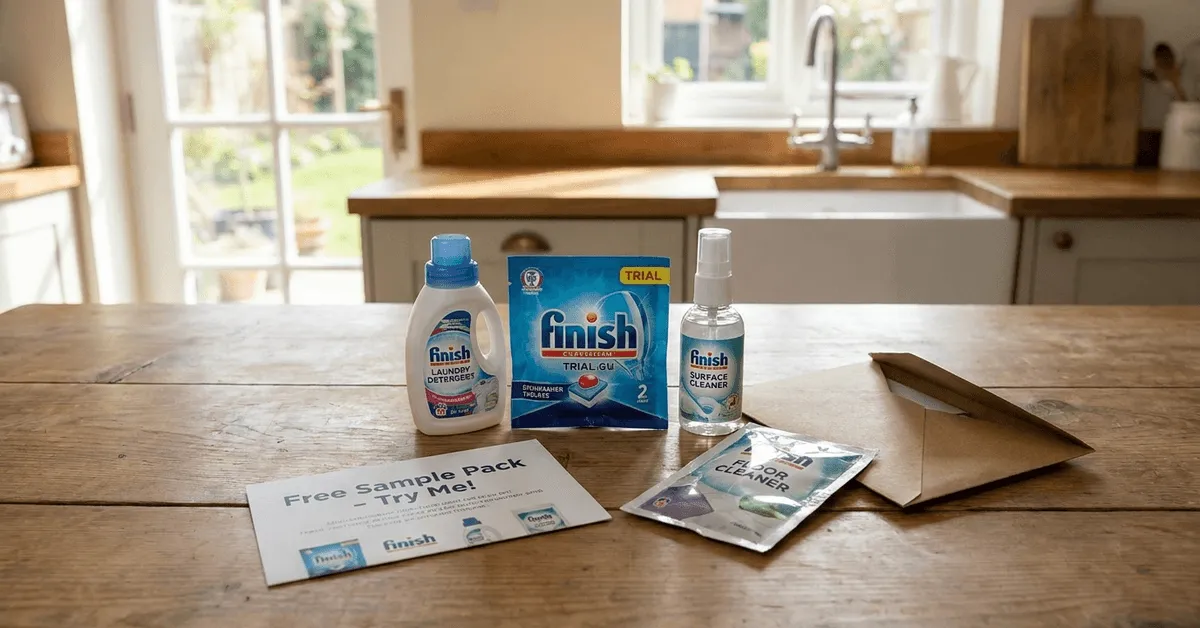
A sample might be a detergent sachet, a dishwasher tablet, a small bottle, or occasionally a full-size product. The format depends on the campaign rather than the category alone, so quantities vary.
Some offers involve a straightforward request form. Others operate as product testing programs , where selected participants receive an item and provide feedback after using it at home.
Receiving a sample does not normally create an obligation to praise it. Where feedback is required, honest observations about cleaning results, scent, and ease of use are more useful than enthusiasm.
However, free products are not guaranteed simply because someone registers. Selection may depend on location, household characteristics, current product use, or the number of available test units.
Where Legitimate Cleaning Sample Offers Appear
Manufacturer Websites and Brand Campaigns
Official manufacturer websites are a useful starting point because they identify the company behind an offer. Sampling campaigns may appear under promotions, newsletters, product launches, or research.
A brand can operate different websites for different countries. An offer published on one regional site may not apply elsewhere, even when the same cleaning product is sold internationally.
Customer newsletters sometimes announce sample releases, although many messages contain only coupons or product news. Newsletter registration should not be confused with a confirmed sample request.
Consumer Testing Communities
Consumer testing communities connect brands with households willing to evaluate products. Cleaning items may appear alongside food, toiletries, and other categories rather than in a dedicated section.
These communities generally recruit for individual campaigns. A completed profile may make someone eligible for consideration, but it does not establish a permanent entitlement to free products.
Which Household Cleaning Products May Be Available?
Laundry detergent samples are a familiar format because a small packet can support a limited trial. Liquid detergent, powder, and single-dose formats may appear in different markets.
Dishwasher tablets and dishwashing liquids can also be distributed in trial quantities. A sample helps reveal practical details, although one wash cannot establish performance across every condition.
Surface cleaners, bathroom products, and cleaning wipes sometimes feature in product launches. Concentrates or refill formats may require a compatible container that is not included with the sample.
Specialist products, such as floor treatments or appliance cleaners, tend to suit narrower audiences. Campaigns may therefore ask about flooring materials, appliance ownership, or existing cleaning habits.
Full-size testing products are possible, but they should not be treated as the normal outcome. Small trial packs are still useful when they answer a specific question before a larger purchase.
What Applicants Usually Need to Provide
A basic sample request may ask for a name, delivery address, email address, and confirmation of age eligibility. Product testing applications often include additional questions about household routines.
Questions about laundry frequency or dishwasher ownership can help match a campaign with relevant users. They are different from requests for banking passwords, payment codes, or identity documents.
Eligibility requirements may include residency in a supported country and a minimum age. Some campaigns also limit participation to one person or one delivery address per household.
Application answers are most useful when they reflect the household accurately. Exaggerating buying habits can result in unsuitable products, inconsistent records, or exclusion under a program's rules.
A confirmation email may acknowledge only that an application was received. Selection, dispatch, and delivery are separate stages, and some programs contact successful participants only after screening.
How Availability Differs Around the World
International brands do not necessarily run international sampling campaigns. Shipping arrangements, local marketing budgets, product registrations, and language requirements can all affect availability.
In some countries, consumer testing communities are active throughout the year. Elsewhere, opportunities may be limited to occasional retailer promotions or short manufacturer-led research projects.
Campaign terms may exclude certain territories, remote delivery areas, or addresses outside a particular postal network. A website being accessible worldwide does not mean its products ship worldwide.
Cross-border delivery can introduce customs charges or restrictions, even when an item itself costs nothing. Most household sampling campaigns avoid this complication by accepting domestic addresses only.
Country-specific information is therefore more useful than broad claims about worldwide freebies. The relevant details are the campaign's supported locations, closing date, stock limits, and delivery terms.
Understanding What “Free” Really Includes
A genuinely free sample may include both the product and standard delivery. Other promotions use the word loosely, attaching postage charges, purchase requirements, or later reimbursement conditions.
Free samples and cashback offers are not the same arrangement. Cashback usually requires an upfront purchase, a valid receipt, and compliance with a separate claim process before money returns.
A coupon also differs from a sample. It may reduce the price of a full-size cleaner, but minimum spending rules, retailer restrictions, and expiration dates determine whether it provides useful value.
Some trial offers enroll customers in recurring deliveries unless they cancel. That is a subscription arrangement, not a simple no-obligation sample, and it creates a different level of financial risk.
The total cost matters more than the headline. A small cleaning sachet loses much of its value when obtaining it involves expensive shipping, unwanted purchases, or difficult cancellation procedures.
Recognizing Misleading Sample Offers and Scams
Legitimate campaigns usually identify the organizer, explain eligibility, and provide understandable terms. Missing company details or conflicting descriptions make an offer harder to verify independently.
Claims that everyone qualifies for expensive bundles deserve caution, especially when there is no clear sponsor. Genuine campaigns often have limited quantities and make no promise of universal selection.
A sample application should not require banking login details, remote access to a device, or payment through gift cards. Those requests have no reasonable role in arranging delivery of a cleaning trial.
Unexpected messages may imitate familiar brands while directing visitors to unrelated domains. A recognizable logo is not proof that the organization named in the message actually controls the website.
HTTPS encryption protects information in transit, but it does not establish that an offer is legitimate. Fraudulent websites can also display a padlock, so the organizer and terms still matter.
Privacy, Marketing Consent, and Household Information
Sampling involves an exchange of information as well as a product. A delivery address may be necessary for shipping, while optional marketing permissions serve a separate purpose that deserves attention.
A privacy notice should explain how personal information is used and whether other organizations receive it. Broad references to unnamed partners can make the consequences of registration less clear.
Marketing preferences are not always identical to participation requirements. Depending on the program and local law, applicants may be able to decline promotional messages while remaining eligible.
Some testing programs request photographs or a written review after delivery. Their terms should clarify whether this content remains private research material or may appear in public marketing.
A separate email address can make sample-related messages easier to organize, but it does not remove privacy risks. The information submitted still needs to be appropriate for the stated campaign.
How to Evaluate a Cleaning Sample Fairly
Performance, Fragrance, and Practical Use
A useful product trial starts with the label instructions, including dilution, suitable surfaces, and dosage. Using more cleaner than recommended can distort results and increase residue or exposure.
Cleaning performance depends partly on the task. Light kitchen grease, dried food, hard-water marks, and everyday dust are different challenges, so one successful use does not prove universal effectiveness.
Fragrance is another practical consideration, especially in small or poorly ventilated rooms. A scent that seems pleasant in the package may feel much stronger during use or remain afterward.
Packaging also affects everyday convenience. A cap that leaks, unclear measuring marks, or a refill that spills can matter as much as cleaning power when deciding whether a product suits a household.
A small sample supports a first impression rather than a complete verdict. Longer-term factors, including repeated fabric washing or the total number of uses, may remain uncertain after a short trial.
Cleaning Product Safety Still Applies to Samples
Small packaging does not make a cleaning chemical harmless. Samples need the same attention to hazard labels, storage instructions, and child safety precautions as a full-size product from a shop.
Cleaning products should never be mixed unless the manufacturer explicitly directs it. In particular, mixing bleach with acids or ammonia can release dangerous gases and cause serious injury.
Single-dose laundry capsules require secure storage away from children and pets. Their compact size can make them easy to overlook, but damaged capsules can expose skin or eyes to concentrated detergent.
Food containers are unsuitable for storing leftover cleaning products because they create a risk of mistaken ingestion. The original labeled packaging helps preserve essential identification and safety details.
Disinfectant claims also depend on the instructions. A product may require a stated contact time and particular preparation, and a pleasant smell alone does not demonstrate that a surface is disinfected.
Applying Through an Official Product Testing Website
Home Tester Club is one example of a consumer product testing community with country-specific participation. Its campaigns cover different categories, and cleaning products may not be available at all times.
Readers interested in participating can visit the official Home Tester Club website to explore registration and available product tests. Local eligibility and campaign terms determine whether an application is possible.
Registration is a starting point, not confirmation of a free cleaning product. Relevant campaigns may require a separate application, and selection can depend on the audience needed for that particular test.
If a testing opportunity includes a public review, any free product or other incentive should be disclosed clearly. Platform rules and local advertising requirements may also apply to that disclosure.
Conclusion: The Best Free Sample Is One With Clear Terms
Free household cleaning product samples offer the most value when they help answer a real purchasing question. A modest trial of a useful cleaner can be worth more than an impressive but unsuitable bundle.
Reliable opportunities explain who runs the campaign, who qualifies, what information is required, and whether any costs apply. They also leave room for honest feedback rather than demanding a positive review.
The practical benefit is not an endless supply of free cleaning products. It is a lower-risk way to discover what works for a household, while keeping spending, personal information, and product safety in view.