Learning how to save money every month on a low income starts with a difficult truth: some budgets have almost no room. Progress depends on finding small opportunities without putting essential needs at risk.
This guide is for people whose wages, benefits, or irregular earnings must cover most of their living costs. It explains a flexible approach to budgeting, reducing expenses, and preparing for bills that do not arrive every month.
There is no universal savings percentage that works for everyone. A useful plan reflects local prices, household responsibilities, and the money actually available after food, housing, healthcare, and other necessities.

What Saving on a Low Income Really Means
Financial stability comes before a savings target
Saving is valuable, but missed rent or essential medication can create more harm than a small savings balance can prevent. A workable budget protects immediate needs before it sets money aside for future financial goals.
For some households, the first improvement is avoiding a late fee. For others, it is getting through the month without new borrowing. These changes may not look like traditional saving, but they can strengthen the next budget.
Small amounts matter, but limits are real
Putting aside two currency units each week adds up to 104 over a year, before interest or fees. That will not solve every emergency, but it might cover a prescription, essential transport, or part of an unexpected bill.
Sometimes there is genuinely nothing left after essential expenses. That is a shortfall, not a character flaw or proof of poor discipline. In that situation, assistance, payment arrangements, or additional income may matter more.
Build a Low-Income Budget Around Reliable Income
Separate dependable income from uncertain money
A low-income budget becomes more useful when it reflects money that is reasonably likely to arrive. Overtime, occasional work, and gifts can help, but essential monthly bills are harder to manage when they depend on them.
For variable earnings, a recent lower-income month can provide a cautious starting point, provided it reflects current circumstances. Higher-income months may then help cover quieter periods rather than create new commitments.
Include expenses that are easy to overlook
Bank statements, receipts, and cash notes can reveal spending patterns that memory misses. Small purchases are worth understanding, although reviewing them is not an invitation to blame every financial problem on minor comforts.
The most useful categories usually include housing, utilities, food, transport, healthcare, debt payments, and irregular expenses. A separate category for flexible spending can preserve some choice without hiding its true cost.
A simple monthly budget example
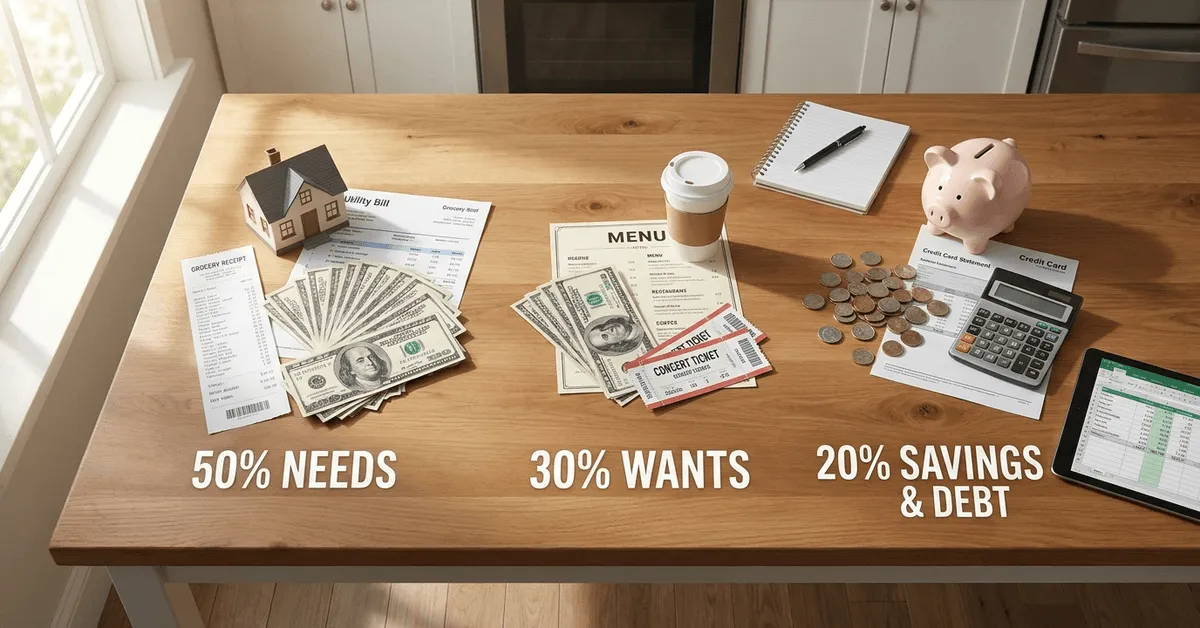
The example below uses 1,000 currency units of monthly take-home income. It illustrates a balanced plan rather than recommended percentages. Actual housing costs, family needs, and public services vary considerably worldwide.
| Budget category | Monthly amount | Purpose |
|---|---|---|
| Housing and fixed bills | 560 | Rent, basic utilities, and necessary recurring services |
| Everyday essentials | 270 | Food, transport, healthcare, and household supplies |
| Irregular expense fund | 90 | Predictable costs that arrive less frequently |
| Current-account buffer | 30 | Small timing differences and minor overspending |
| Flexible spending | 30 | Personal choices within available income |
| Emergency savings | 20 | Unexpected essential expenses |
| Total | 1,000 | Every unit has an assigned purpose |
A household with higher rent might have no emergency savings line yet. The table still provides a way to identify that gap clearly. Changing the figures to match reality is more useful than forcing an attractive savings rate.
Separate Monthly Bills From Irregular Expenses
Predictable costs deserve their own fund
School supplies, annual insurance, seasonal heating, and routine repairs can feel unexpected when they are missing from the monthly budget. They are often irregular rather than surprising, which makes gradual preparation possible.
A sinking fund holds money for a known future expense. If a necessary payment of 120 currency units is due in six months, setting aside 20 each month would cover it, assuming the payment amount does not change.
Timing matters as much as the monthly total
A budget can balance on paper and still fail when several bills arrive before payday. A simple calendar of income dates and payment dates can reveal whether the real problem is total spending, cash flow, or a combination of both.
Some providers allow payment dates to move closer to payday, although availability and charges vary. A date change only helps when the new schedule fits income timing and does not create an unaffordable transition payment.
Reduce Recurring Bills Without Losing Essential Services
Compare the full cost of necessary contracts
Mobile service, internet, insurance, and banking charges can quietly consume money every month. A cheaper suitable plan may create repeat savings without requiring a fresh spending decision every time a purchase comes up.
The lowest advertised price is not always the cheapest overall. Activation costs, cancellation fees, data limits, and promotional expiry dates can change the calculation, especially when switching requires an upfront payment.
Look beyond small subscriptions
Unused subscriptions are relatively simple to identify, but housing and transport often have a much larger effect on household finances. Unfortunately, these larger costs may also be the least practical ones to change quickly.
A move to cheaper housing can involve deposits, moving expenses, longer journeys, and different childcare arrangements. The useful comparison is the total ongoing cost and disruption, not the rent figure considered alone.
Save Money on Groceries Without Sacrificing Nutrition
Food already at home has immediate value
A quick view of cupboard, refrigerator, and freezer contents can reduce duplicate purchases and forgotten ingredients. Meals built around food already available often offer savings without requiring a strict or complicated menu.
Affordable staples differ by location, but beans, lentils, eggs, seasonal produce, and suitable frozen foods can offer good value. Dietary needs, cooking facilities, fuel prices, and preparation time all affect the best options.
Unit prices help when the comparison is fair
Price per kilogram, litre, or usable portion can make package sizes easier to compare. A larger pack is only better value when there is enough money to buy it, adequate storage, and a realistic chance of using the contents.
Food waste is sometimes a bigger opportunity than a lower shelf price. Safe storage and realistic portions can stretch a food budget, while planned convenience foods may still be worthwhile when they prevent costlier takeaways.
Build a Small Emergency Fund That Fits Your Budget
A specific first milestone can feel more achievable
A large emergency fund may feel distant when income barely covers bills. A smaller initial goal, such as essential travel or a routine repair, can connect saving to a problem the household could realistically face in the near future.
The right starting amount depends on local costs and existing support. Even a modest cushion can reduce the need for expensive borrowing, but it should not be built by leaving rent, essential utilities, or necessary treatment unpaid.
Separate savings without creating extra fees
A separate savings space can make emergency money easier to recognize and harder to spend accidentally. That might be a bank subaccount or another secure option, depending on account access and financial services in the country.
Account fees, minimum balances, withdrawal rules, and deposit protection matter more than an attractive headline interest rate on a tiny balance. Emergency savings need to remain accessible when an essential expense arrives.
Automation works best with predictable cash flow
A small automatic transfer after payday can support regular saving when income and bill timing are stable. With irregular earnings, a manual transfer after essential payments may be safer than a schedule that risks overdraft fees.
Pausing a transfer during a difficult month does not erase earlier progress. Using savings for a genuine emergency is also not a failure. The money has performed its intended job, even if rebuilding the balance takes some time.
Balance Debt Payments With a Basic Savings Cushion
Not all debt has the same consequences
Debt decisions involve more than comparing interest rates. Missed housing payments, secured borrowing, or certain public debts can have serious consequences, and the rules about priority obligations differ between countries.
Among otherwise comparable debts, paying down a higher interest rate usually reduces interest costs faster. However, minimum payments, penalties, legal consequences, and essential living expenses still shape what is affordable.
Avoid saving through expensive borrowing
Moving money into savings while using costly credit for groceries can leave a household worse off overall. A small cash cushion may still be useful, but a growing savings balance is misleading when expensive debt rises beside it.
If repayments are unaffordable, free independent debt advice may help clarify local options before arrears become more serious. Debt relief services that demand large advance fees or promise guaranteed results deserve caution.
Check Financial Assistance and Lower Essential Costs
Support can create room that budgeting alone cannot
Depending on location and eligibility, assistance may cover food, housing, healthcare, childcare, energy, or employment-related costs. These programmes are part of the financial picture, although access and waiting times vary.
Official government websites and recognised local advice organisations are useful starting points for understanding eligibility. Household income, savings, residency, working hours, and family circumstances may affect entitlement.
An official application route for eligible UK readers
Readers in the United Kingdom who may qualify can begin through the official Universal Credit application guidance. This is a UK-specific option; eligibility and payment timing depend on individual circumstances.
Readers elsewhere may have different national or local programmes, so an application intended for another country would not be suitable. Benefit checks are most useful when they reflect current local rules and the household's details.
Consider Extra Income by Its Net Value
More earnings do not always mean the same increase in cash
Additional hours or occasional work may help when spending has already been reduced as far as reasonably possible. The useful figure is what remains after transport, childcare, supplies, taxes, and any change in income-related support.
For example, an extra shift paying 40 currency units may leave only 15 after necessary travel and care costs, before any tax adjustment. That does not make it worthless, but it changes the amount available for monthly savings.
Uncertain earnings are a weak foundation for fixed bills
Occasional sales of unused belongings can provide a one-time boost, rather than dependable monthly income. Such money may suit a small emergency fund or overdue essential expense better than a new recurring financial commitment.
Jobs requiring upfront payments, guaranteed investment profits, or requests to receive and forward money can expose people to scams. A savings plan should not depend on speculative returns or an income opportunity that cannot be verified.
Make a Monthly Savings Routine Manageable
A short review can reveal what actually helped
A monthly review can compare expected income with actual spending and identify the reason for any difference. A higher food bill might reflect rising prices or extra household needs rather than a budgeting mistake that needs correction.
Useful measures include fewer late fees, less expensive borrowing, money reserved for an annual bill, and a small emergency balance. Looking at several measures gives a fairer picture than judging progress by savings alone.
Leave room for an imperfect month
A budget with no flexibility can be difficult to maintain for long. Where affordable, a modest amount for personal spending may make the wider plan more sustainable, particularly when financial pressure has continued for months.
The most helpful savings target is one that can change when life changes. A reduction in hours, illness, or higher rent may require a reset. Returning to a smaller amount is usually more realistic than trying to recover everything at once.
Conclusion: Small Savings Work Best With a Realistic Plan
Saving money on a low income is not about perfect discipline or removing every enjoyable purchase. It is about protecting essentials, reducing avoidable costs, and gradually making the next unexpected expense easier to handle.
Some months, progress will be a transfer into savings. In others, it may be keeping the lights on without another costly loan. Both deserve recognition, especially when the household is working with very little financial room.
A realistic budget, accessible support, and a small financial cushion can reinforce one another over time. The goal is not an impressive percentage on paper, but greater stability and a little more choice when the next month begins.