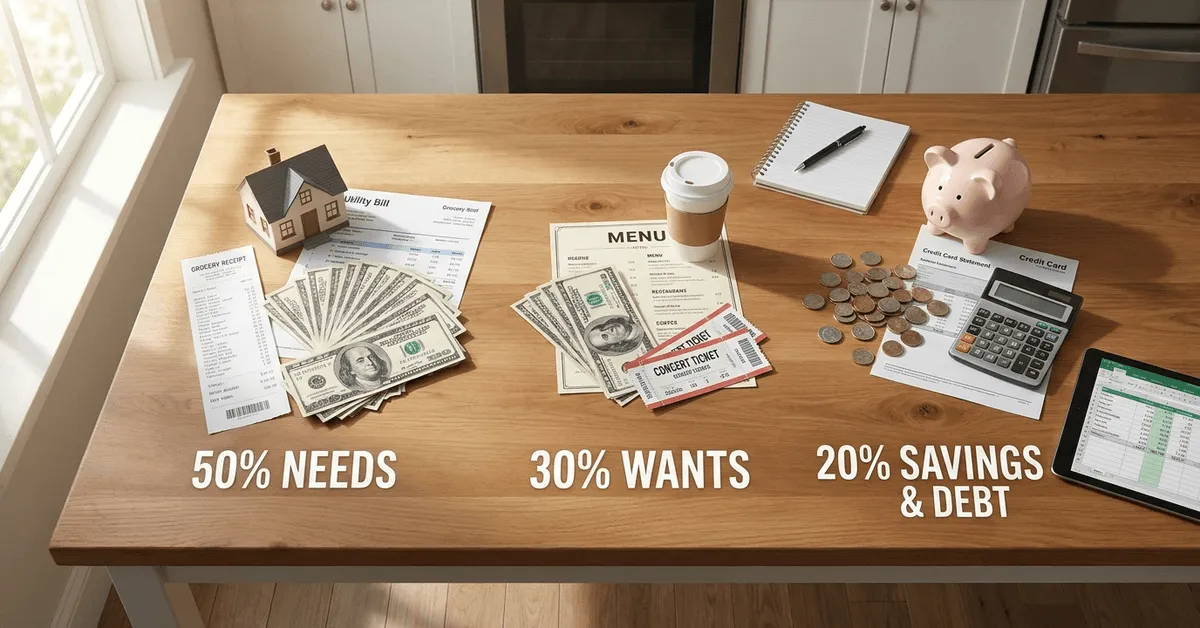
Managing several debts can feel overwhelming when income barely covers daily life. Different payment dates and interest charges add pressure. A workable plan starts with knowing what your budget can actually support.
This guide explains how to manage multiple debts with a limited budget. It is for households balancing loans, cards, and overdue bills. The goal is greater control, not an unrealistic promise of instant relief.
Debt rules, repayment options, and consumer protections differ across countries. The budgeting principles below travel more easily than legal details. Local advice matters when a decision could affect housing or legal rights.
Why Multiple Debts Become Difficult to Manage
Several affordable-looking payments can become unaffordable when added together. Interest, fees, and changing household costs make the picture harder to follow. The problem is often cash flow rather than a lack of effort.
A limited budget also leaves little room for mistakes or unexpected expenses. A delayed wage payment or essential repair can disrupt several accounts. That is why repayment speed is only one part of effective debt management.
A useful debt plan balances three competing needs: essentials, required payments, and resilience. Paying aggressively may feel productive at first. It becomes less useful if groceries or transport then require new borrowing.
Build a Complete Picture of Your Debts
What belongs on a debt inventory
A debt inventory brings scattered information into one clear record. Useful details include the creditor, balance, interest rate, minimum payment, and due date. Arrears and collection notices belong in the same overview.
Other details can change which account needs attention first, even with a smaller balance.
These include security over an asset, a guarantor, or a court deadline.
Promotional interest rates also need their expiry dates recorded.
Statements and account records are usually more reliable than remembered figures.
Some balances change daily, while others include charges not yet visible.
A dated snapshot is enough to establish a practical starting point.
Why interest rates are not the whole story
The highest interest rate does not always identify the most urgent obligation. A debt linked to housing or an essential vehicle may carry a different risk. Legal consequences can matter more than the interest charged this month.
Unsecured debts still deserve attention, but their consequences vary by location. A collection letter, formal demand, and court document are not interchangeable. Each can involve different rights, deadlines, and possible responses.
Calculate an Affordable Monthly Debt Payment
Start with reliable income and essential expenses
An affordable repayment amount comes from income left after essential living costs. Those costs commonly include housing, food, utilities, and necessary transport. Healthcare and dependent care may also be unavoidable expenses.
For irregular earnings, a conservative baseline is often more useful than a good month. Higher-income periods can then support overdue bills or additional payments. This reduces reliance on income that may not arrive consistently.
Annual and seasonal expenses need space in the calculation as well as monthly bills. Insurance renewals, school costs, and basic maintenance are predictable categories. Dividing them across months makes the budget more realistic.
A modest contingency allowance can make a repayment plan less fragile over time. Its size depends on immediate needs and the consequences of missed payments. There is no universal savings target that fits every indebted household.
A limited-budget example
The example below uses generic currency units rather than a particular national currency. It shows how a household can appear solvent while still facing a payment gap. All amounts are illustrative monthly figures, not recommended targets.
| Budget category | Monthly amount |
|---|---|
| Take-home income | 1,000 |
| Essential living costs | 820 |
| Contingency allowance | 30 |
| Available for debt payments | 150 |
| Total contractual minimum payments | 180 |
| Monthly payment shortfall | 30 |
This household has 150 available, but its required minimum payments total 180. Choosing a faster repayment method cannot resolve that underlying shortfall. The immediate issue is affordability, not which balance falls first.
If agreed payment reductions brought the total requirement down to 120, the position changes. The remaining 30 could support additional repayment or another urgent need. Any reduction would depend on actual creditor agreements.
Prioritize Debts by Consequences Before Interest
Priority debts are obligations whose nonpayment can have especially serious consequences. The exact classification depends on local law and circumstances. Housing arrears and certain public obligations often require early attention.
Potential consequences can include losing accommodation, essential services, or secured property. Some obligations may also trigger enforcement through local courts. A higher-interest credit card does not automatically outweigh those risks.
Formal deadlines deserve separate attention because budgeting alone does not pause them. A creditor discussion may help, but it may not stop legal proceedings. Written notices explain the process more accurately than assumptions.
Once urgent obligations are addressed, other debts can be arranged around affordability. That might involve normal payments, negotiated terms, or regulated assistance. A workable order depends on both consequences and available cash.
Debt Avalanche vs. Debt Snowball on a Tight Budget
How the debt avalanche method works
The debt avalanche method directs extra money toward the highest-interest debt. Required payments continue on the remaining accounts wherever affordable. After one balance clears, that payment moves to the next target.
With comparable terms and consistent payments, this approach generally reduces interest costs. It can work well when rates differ significantly between accounts. Progress may feel slow if the most expensive balance is also large.
How the debt snowball method works
The debt snowball method targets the smallest balance before larger accounts. Required payments continue elsewhere while extra money follows that order. Closing an account can provide a visible, encouraging milestone.
This method may cost more interest when a larger debt carries a higher rate. However, some people find that fewer open balances make the plan easier to maintain. The psychological benefit is real for some households, not everyone.
When neither method solves the problem
Both methods assume there is money left after essential costs and required payments. Without that surplus, choosing between them changes little. Affordable arrangements or formal debt support may be more relevant instead.
A hybrid approach can also be reasonable when account terms or circumstances change. For example, a small balance may be cleared before an expensive promotional rate ends. The decision still needs to account for total costs and urgent risks.
What Creditors May Offer When Payments Are Unaffordable
Some creditors offer financial hardship assistance when a borrower cannot maintain payments. Possible measures include reduced instalments or temporary interest relief. Availability depends on the lender, contract, and local rules.
A hardship discussion is usually clearer when supported by an income-and-expense summary. It explains why the current payment is unaffordable and what may be sustainable.Relevant circumstances can include reduced hours or higher essential costs.
Lower payments do not necessarily mean a lower total borrowing cost over time. Interest may continue, repayment periods may lengthen, and credit reporting may change. Those details matter as much as the immediate monthly reduction.
Written confirmation helps establish what a creditor has actually agreed to change. Important terms include payment amounts, duration, fees, and treatment of arrears. An informal conversation alone may leave important questions unresolved.
Reduce Cash-Flow Pressure Without Cutting Essential Needs
A useful spending review separates genuine flexibility from costs that protect daily life. Unused subscriptions and avoidable account charges may offer some room. Food, medication, and essential transport are a different category.
Payment timing can matter even when the monthly totals appear manageable on paper. Several bills falling before payday can create repeated overdrafts or late fees. Some providers allow due-date changes, although not every account qualifies.
Automatic payments can reduce missed deadlines when the account balance is dependable. They can also trigger fees if income arrives late or amounts unexpectedly change. For tight budgets, automation works best with realistic cash-flow checks.
Additional income only improves the position by the amount left after related costs. Transport, childcare, platform fees, and taxes can reduce the apparent benefit. A modest, reliable gain may help more than an uncertain headline amount.
Debt Consolidation: Lower Payment or Higher Overall Cost?
Debt consolidation combines existing borrowing into a new loan or credit arrangement. It can simplify payment dates and sometimes reduce the interest rate. Approval, pricing, and actual savings depend on individual circumstances.
A smaller monthly payment may simply reflect a longer repayment period rather than savings. Arrangement fees, transfer charges, and variable rates can add further costs. The total repayable amount provides a more useful comparison.
Moving unsecured borrowing onto a loan secured against a home changes the risk involved. The payment may look more manageable while the consequences become more serious. That distinction deserves particular care when income is already stretched.
Consolidation also leaves the underlying budget unchanged unless something else improves. If cleared credit lines are used again, total debt can rise rather than fall. One payment is simpler, but simplicity alone does not create affordability.
Find Legitimate Debt Help and Avoid Costly Traps
What trustworthy support generally explains
Reliable debt support explains available options, likely costs, and important limitations. It does not need to promise guaranteed write-offs or immediate credit repair. Qualified advisers can help distinguish budgeting problems from insolvency risks.
A debt management plan may distribute affordable payments among participating creditors. It is not necessarily a new loan or a legally binding protection from enforcement. Fees, interest treatment, and creditor participation differ between arrangements.
Debt settlement is different because it generally seeks acceptance of less than the balance. It can involve missed payments, charges, collection activity, and possible tax effects. No provider can guarantee that every creditor will agree.
Insolvency procedures may offer relief when repayment is not realistically achievable. They can also affect assets, credit records, professional activities, or future borrowing. Eligibility and consequences require advice under the relevant jurisdiction.
Official information and an application route
In the United States, the CFPB's official debt collection resource[s explain common rights and complaint routes. The material is U.S.-specific rather than a worldwide legal guide. Other countries have their own authorities.
Eligible U.S. federal student loan borrowers can apply for income-driven repayment through Federal Student Aid. Available plans and eligibility can change over time. The official application explains the current options.
That application concerns qualifying U.S. federal student loans, not general consumer debt.
It does not consolidate credit cards or guarantee a reduced payment. Borrowers elsewhere need the equivalent local education-finance authority.
Warning signs include guaranteed results, unexplained upfront charges, and pressure to act. Requests for banking passwords or one-time security codes are especially concerning. Official websites provide a safer starting point for verification.
Review the Plan Without Expecting Perfect Progress
A monthly review shows whether the plan still matches real income and living costs.
Useful measures include balances, interest charged, fees, and missed payments.
Account statements provide a firmer picture than a single credit score.
Not every successful month produces a dramatic reduction in the total amount owed.
Avoiding a new late fee or keeping essential bills current can still represent progress.
Stability often comes before a noticeably faster repayment pace.
A lasting drop in income or rise in essential expenses can make an earlier plan unsuitable. Revising an unaffordable arrangement is different from abandoning the goal. A sustainable payment matters more than an ambitious number on paper.
Conclusion: A Sustainable Debt Plan Protects More Than Your Balance
Managing multiple debts on a limited budget starts with an honest affordability calculation. Essential needs and serious consequences come before repayment shortcuts. Only then does choosing a faster payoff strategy become useful.
The strongest plan is not necessarily the one promising the earliest debt-free date. It is the one that remains workable through ordinary setbacks without creating new crises. Steady progress begins when the numbers fit real life.