Knowing how to manage money with irregular income matters when your earnings change from month to month. A budget built around a fixed salary often feels unrealistic when payments arrive unevenly.
This guide is for freelancers, seasonal workers, contractors, commission earners, and anyone whose household income fluctuates. The aim is greater stability, not a perfectly predictable paycheck.
A workable system separates essential costs from flexible spending, accounts for payment delays, and gives stronger months a clear purpose. That structure can make financial decisions feel less reactive.

Why Budgeting With Irregular Income Requires a Different Approach
A traditional monthly budget assumes that income arrives regularly and roughly matches expectations. With variable earnings, the amount matters, but the timing of each payment matters just as much.
A household can earn enough across a full year and still struggle to pay a bill on Tuesday. This is a cash flow problem, and it needs a different response from a genuine shortage of annual income.
There is also a psychological complication. A strong month can feel like a permanent improvement, while a weak month can feel like failure. Neither necessarily reflects the long-term financial picture.
Irregular income budgeting works best when spending follows a dependable baseline rather than the latest payment. Extra earnings then support future obligations instead of quietly becoming new commitments.
Calculate Your Essential Monthly Spending
Separate Basic Needs From Adjustable Costs
A useful starting point is the minimum amount needed to keep the household functioning. Housing, basic groceries, utilities, necessary transport, insurance, and required debt payments usually belong here.
Some expenses resist neat labels. Internet access may be essential for a remote worker, while childcare may make paid work possible. The relevant question is what supports basic living and earning capacity.
Flexible expenses include purchases that can change without immediately threatening housing, health, or income. Entertainment, optional subscriptions, and nonessential upgrades often fit this category.
This distinction is not a judgment about what makes life enjoyable. It creates a baseline budget that shows how much income is needed before discretionary spending becomes financially comfortable.
Include Costs That Do Not Arrive Monthly
Annual insurance, school fees, professional renewals, and vehicle maintenance can make an otherwise reasonable budget fail. Their timing is irregular, but their existence is often entirely predictable.
For example, an annual expense of 600 currency units creates a monthly planning cost of 50. Treating that amount as part of normal spending reduces the shock when the actual payment becomes due.
| Expense category | Illustrative monthly amount |
|---|---|
| Housing and basic utilities | 850 |
| Groceries and household essentials | 300 |
| Necessary transport and work costs | 180 |
| Insurance and minimum debt payments | 170 |
| Provision for predictable annual bills | 100 |
| Total baseline | 1,600 |
These figures are examples in generic currency units, not recommended spending levels. Actual essentials depend on local prices, household size, health needs, public services, and existing obligations.
Estimate a Conservative Income Baseline
Look Beyond Your Best Month
Past earnings provide context, especially when several months of records are available. A full year can reveal seasonal patterns that a short period hides, although older figures may no longer be relevant.
An average is useful for understanding annual earning power, but it can be risky as a spending target. A few unusually profitable months may lift the average above what ordinary months can support.
A more cautious reference point is a lower, reasonably repeatable income level, adjusted for known changes. This is not necessarily the lowest month ever, particularly if that month was exceptional.
Someone earning between 1,400 and 3,200 monthly might use 1,700 as a provisional planning figure if records support it. The right number depends on evidence, not a universal budgeting formula.
Distinguish Revenue From Spendable Income
For self-employed workers, a payment received is not automatically personal spending money. Business expenses, platform charges, refunds, and tax obligations can reduce the amount actually available.
Spendable income is the amount left after relevant business costs and appropriate tax provisions. Using gross revenue as household income can make an affordable-looking budget misleading.
Build a Cash Flow Calendar Around Payment Dates
A monthly total does not reveal whether money arrives before rent is due. A simple cash flow calendar shows expected receipts beside bill dates, making short gaps easier to identify in advance.
The most useful entries include current available cash, confirmed payments, essential bills, and expected timing. Unconfirmed work can remain visible without being treated as money already available.
Payment certainty matters here. An invoice awaiting approval, a scheduled wage payment, and a possible commission have different levels of reliability, even if all three appear in an income forecast.
Where providers allow it, a different billing date may reduce a recurring mismatch. This changes payment timing rather than affordability, so the underlying expense still belongs in the household budget.
Use Stronger Months to Create an Income Buffer
Understand What a Buffer Actually Does
An income buffer holds money from stronger periods so that ordinary bills remain covered during weaker ones. Its purpose is to smooth income, not to increase the household's regular spending level.
For a household with essential monthly costs of 1,600, a buffer of 800 covers about half a month of those costs. That may not solve every problem, but it creates more breathing room than no reserve.
A full month of essential spending can become a useful milestone, followed by a larger amount where income is highly seasonal. There is no single correct target for every type of variable-income work.
Make Personal Transfers More Predictable
Some workers use a holding account for incoming earnings and transfer a planned amount into a spending account. This creates a steadier household rhythm without pretending the underlying income is fixed.
The transfer amount still needs to reflect actual earnings and available reserves. Paying yourself an ambitious monthly amount can drain the buffer and hide a structural mismatch between income and costs.
Account arrangements also have practical limits. Fees, minimum balances, withdrawal restrictions, and deposit protection vary by country and provider, so simplicity is often more useful than extra complexity.
Keep Emergency Savings Separate From Predictable Expenses
An income buffer, an emergency fund, and money for annual bills serve different purposes. Keeping those purposes distinct makes it easier to understand how much financial protection actually exists.
A predictable seasonal slowdown belongs in income planning. An annual insurance bill belongs in a planned expense reserve. An urgent repair or unexpected medical cost may belong in emergency savings.
The same balance cannot fully protect against several events at once. If 1,000 is already needed for next month's rent, treating it as an additional 1,000 emergency fund overstates the available cushion.
Emergency savings usually need to be accessible and relatively stable in value. Money needed for near-term essentials generally has little room to recover from investment losses or access restrictions.
Plan for Taxes Without Relying on a Universal Percentage
Tax planning becomes especially important when no employer withholds money automatically. Income tax, social contributions, business taxes, and reporting deadlines vary widely across jurisdictions.
A fixed tax percentage shared online may be too high for one worker and dangerously low for another. The appropriate reserve depends on local rules, allowable expenses, total income, and personal circumstances.
In some systems, estimated payments are due during the year rather than only after an annual return. A separate tax balance can help prevent money owed to the authorities from funding everyday spending.
Records of income, invoices, receipts, and previous payments support more accurate calculations. Official tax guidance or a qualified local adviser can clarify obligations when employment arrangements are complicated.
Handle Debt Without Depending on Another Strong Month
Debt creates fixed commitments even when earnings remain uncertain. Minimum contractual payments therefore belong in the baseline budget, alongside essential living costs and other unavoidable obligations.
Additional repayments can reduce interest, but using every available unit of cash may leave the household borrowing again after a weak month. Liquidity and debt reduction need to be considered together.
Higher-interest debt often deserves particular attention, although arrears involving housing, utilities, or legal consequences may be more urgent. Local protections and the consequences of nonpayment matter.
If a shortfall appears likely, early contact with a lender may reveal hardship arrangements or revised terms. Availability varies, and any agreement needs to be understood before its costs are accepted.
Adjust Flexible Spending Without Rebuilding the Budget Every Week
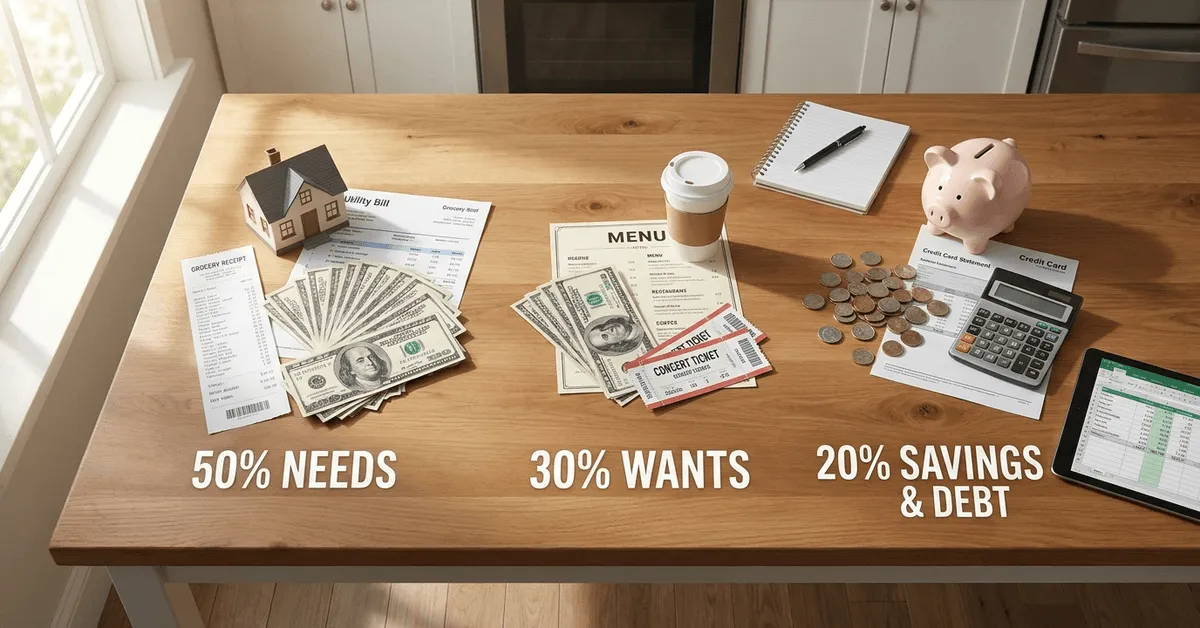
Percentage budgets can offer a useful reference, but rigid rules often fit variable income poorly. Essential costs may consume most of a weak month's earnings even when spending is already restrained.
A more adaptable approach uses spending layers: essentials first, provisions for known obligations next, and flexible purchases after that. Available cash determines how much room exists in the final layer.
This does not require treating every enjoyable purchase as a mistake. A realistic allowance for ordinary pleasures can make a financial plan easier to maintain, provided essential commitments remain covered.
The key distinction is between temporary spending and permanent commitments. A one-time purchase after a good month has a different effect from adding another subscription or accepting a larger loan payment.
Recognize When the Problem Is More Than Budgeting
A budget cannot permanently solve a gap where dependable income remains below essential costs. Recognizing that limit is important, because repeated shortfalls are not always evidence of poor discipline.
Persistent gaps may reflect expensive housing, inadequate work, illness, caring responsibilities, or delayed client payments. Different causes require different responses, rather than another tracking app.
Public assistance, income support, utility relief, or subsidized services may help eligible households. Availability and treatment of self-employment income depend on the country and the specific program.
For eligible UK residents, applications are available through the official Universal Credit application page. Eligibility depends on personal circumstances; support is not guaranteed.
That application route is specific to the United Kingdom, not a worldwide benefit. Elsewhere, the relevant government benefits agency provides local eligibility rules and official application procedures.
Review Your Plan Using a Few Meaningful Numbers
A useful review does not need dozens of categories. Available cash, upcoming essential bills, tax provisions, and the size of the income buffer often explain more than a detailed list of minor purchases.
Comparing expected payments with actual receipts also reveals whether delays are becoming routine. For independent workers, slow collections can create instability even when demand for their work is strong.
Changes in household costs deserve attention too. A baseline calculated months ago may no longer reflect rent, transport, food, or care expenses, particularly where prices or exchange rates move quickly.
The purpose of reviewing these numbers is adjustment, not self-criticism. A budget is a working estimate, and revising it after new information is a sign that the system is responding to real conditions.
Conclusion: Financial Stability Comes From a Repeatable System
Learning how to manage money with irregular income is less about predicting every payment and more about reducing dependence on perfect timing. A clear baseline and a usable cash reserve create options.
Progress may begin with one bill funded ahead of time, a separate tax balance, or a small cushion between payments. Those changes can look modest while still making everyday financial decisions easier.
The strongest plan is one that survives an ordinary weak month without relying on wishful thinking. Over time, realistic spending, stronger reserves, and regular adjustments can turn uneven earnings into greater stability.