A monthly budget connects the money coming in with the costs of everyday life. Its purpose is not perfect spending, but a clearer picture of what your income can realistically support over time.
For employees, freelancers, students, and families, budgeting can make financial decisions feel less uncertain. The same basic process works across currencies, although local costs and rules differ.
A useful plan includes ordinary bills, occasional expenses, and some room for things that go wrong. That flexibility matters more than a beautiful spreadsheet that becomes impossible to follow.

What Makes a Monthly Budget Work?
A workable budget reflects actual circumstances rather than an ideal version of daily life. Housing, food, transport, debt, and family responsibilities all compete for the same limited income.
The basic calculation is simple: income minus planned spending shows what remains available. Savings and debt overpayments also need a place in that calculation, rather than whatever is left.
A positive balance creates choices, but it does not automatically mean every remaining amount is available to spend. Upcoming bills or delayed payments may already have a claim on that money.
A negative balance is useful information, not a personal failure. It shows that expenses, income, or payment arrangements need attention before the same shortfall carries into another month.
Monthly Income: The Starting Point for a Realistic Plan
Take-home income is the amount available after taxes and other payroll deductions. A budget based on gross salary can look healthy on paper while leaving too little money for actual household bills.
Regular income may include wages, pensions, benefits, or reliable contributions from another household member. Money that is uncertain belongs in a different category until its arrival becomes clearer.
Freelancers and business owners often receive payments before tax and business costs are settled. Their household budget therefore depends on what remains after reasonable business and tax reserves.
For people paid weekly, multiplying a paycheck by four understates average monthly income. Weekly pay multiplied by 52 and divided by 12 gives an annualized average, not a monthly cash-flow guarantee.
Expense Tracking That Reveals the Real Numbers
Recent bank statements, receipts, and digital wallet records can show where money actually goes. Several months of records usually provide a more useful picture than one unusually cheap or costly month.
Cash spending deserves a place alongside card purchases and bank transfers. Otherwise, small withdrawals can become a blind spot, especially when they cover meals, transport, or informal payments.
Credit card purchases and repayments need consistent treatment. Counting a purchase as spending and counting its full repayment again can accidentally double the same expense in a budget report.
Interest and fees are separate costs, while repayment of an older balance belongs in the debt plan. Transfers between personal accounts are not new income or spending simply because money moved.
Budget Categories That Match Everyday Life
Fixed and Essential Expenses
Fixed expenses are predictable payments such as rent, insurance, or a regular loan installment. Their stability makes planning easier, although the amounts may still change when contracts renew.
Essential costs are not always fixed. Groceries, electricity, and necessary transport may vary each month while remaining difficult to avoid. This distinction helps explain why rigid limits can fail.
Flexible and Discretionary Expenses
Flexible categories include costs that can change in timing, size, or frequency. Restaurant meals, entertainment, and optional subscriptions often belong here, depending on personal circumstances.
A category becomes useful when it supports a decision. Ten clear categories may explain more than forty detailed ones, particularly when several small labels make the overall spending pattern harder to see.
A Monthly Budget Example With Balanced Numbers
Consider a household receiving 3,000 currency units each month. The example below uses neutral units because the budgeting logic travels better than assumptions about local salaries or living costs.
Housing and utilities account for 1,050 units, groceries for 450, and transport for 250. Together, these everyday essentials use 1,750 units, leaving 1,250 for other obligations and financial goals.
Minimum debt payments receive 250 units, irregular expenses 200, and emergency savings 250. Another 400 covers personal spending, while a 150-unit checking buffer brings the total allocation to 3,000.
These figures illustrate the arithmetic, not an ideal spending standard. A household facing higher rent or medical costs would need a different allocation, even with exactly the same monthly income.
Budgeting Methods and Where They Fit
The 50/30/20 Budget
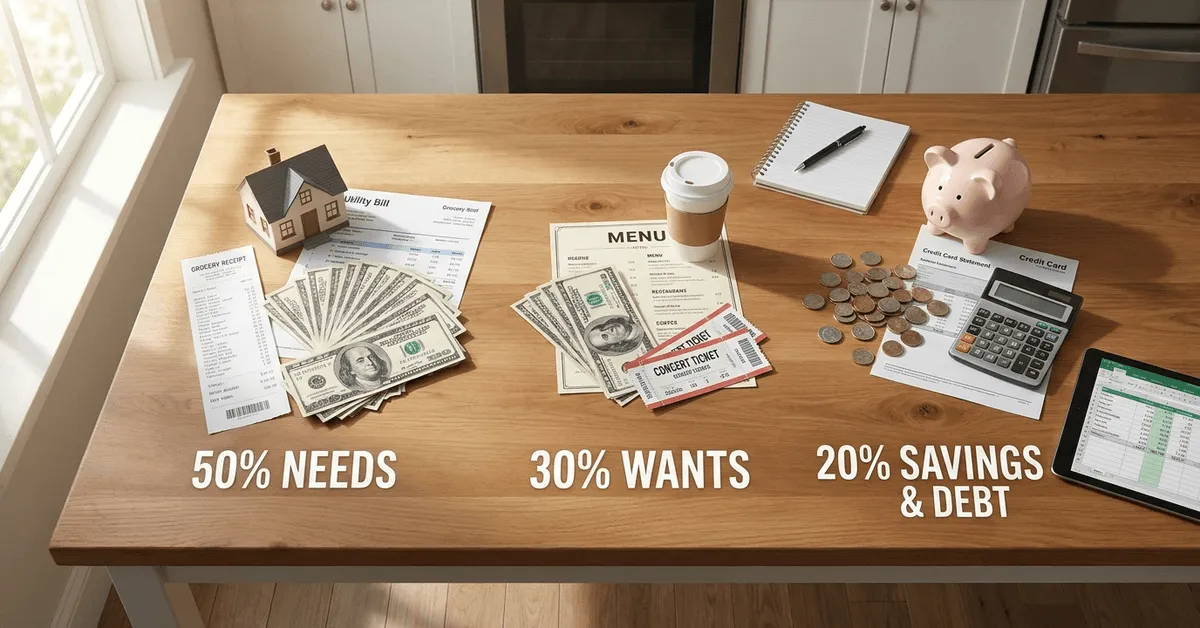
The 50/30/20 budget commonly allocates 50% of take-home income to needs, 30% to wants, and 20% to savings and debt repayment goals. It offers a starting framework rather than a universal affordability test.
High housing costs, low income, or major care responsibilities can make those percentages unrealistic. A different split may reflect necessary expenses more honestly without making the budget less valid.
Zero-Based and Envelope Budgeting
Zero-based budgeting assigns all available income a purpose, including savings and a buffer. A zero balance in the plan means nothing is unassigned; it does not mean the bank account must be empty.
Envelope budgeting places a defined amount into each spending category, physically or digitally. It can make limits easier to see, although shared spending and card purchases require coordination.
Irregular Expenses That Often Break a Budget
Annual insurance, school costs, repairs, and seasonal celebrations are easy to overlook because they do not appear every month. They are still part of the household's real cost of living over time.
A sinking fund spreads a known future cost across the months before payment is due. A 600-unit annual bill requires 50 units per month when the full twelve months remain available for saving.
The timeline changes the calculation. If that same 600-unit bill is due in three months and nothing is saved, the monthly amount becomes 200 units. Dividing by twelve would hide the immediate gap.
Predictable irregular costs differ from emergencies. A yearly registration fee has a known pattern, while an unexpected urgent repair may not. Separate categories make both kinds of pressure clearer.
Emergency Savings and Debt Within the Same Plan
An emergency fund provides money for genuine financial shocks. Even a modest reserve can reduce reliance on expensive borrowing, although the right amount depends on income stability and household risks.
Several months of essential expenses is a common longer-term reference point, not a requirement to achieve immediately. Early progress may simply mean covering one likely disruption without new debt.
Debt planning begins with required payments, interest rates, fees, and the consequences of missing a bill. Secured debts and priority obligations may require attention beyond a simple highest-rate comparison.
Extra payments toward high-interest debt can reduce interest costs, while paying smaller balances first may feel more motivating. Neither approach removes the need to protect essentials and minimum payments.
Monthly Budgeting With Irregular Income
Variable earnings make a single average income figure less useful for immediate decisions. A strong month can hide the difficulty of covering essential bills during a slower period later in the year.
A conservative income baseline can show what the household can support more consistently. Historical earnings help, but they do not guarantee future work, client payments, commissions, or seasonal demand.
During stronger months, surplus income can fund tax reserves, upcoming expenses, and a cushion for weaker months. That money has a job even when the current account balance looks unusually comfortable.
A cash-flow calendar adds another layer by showing when income arrives and bills leave. Monthly totals can balance while payment dates still create a temporary shortfall in the middle of the month.
Budget Reviews That Lead to Useful Adjustments
A brief weekly review can reveal overspending, missing transactions, or an approaching bill before the month ends. The purpose is awareness, rather than judging every purchase or checking balances constantly.
The monthly review compares planned amounts with actual spending. A repeated grocery shortfall may indicate an unrealistic estimate, not a discipline problem, especially when food prices have recently increased.
A one-time overspend and a recurring gap need different responses. An unexpected replacement may be absorbed by a reserve, while persistent overspending requires a lasting change somewhere in the plan.
Shared household budgets also depend on clear responsibility. Knowing who tracks bills, how joint costs are divided, and which purchases need discussion can prevent confusion that looks like a money problem.
Common Budgeting Mistakes and Their Real Costs
Overly restrictive spending limits can create a cycle of failure and abandonment. A small, affordable allowance for enjoyment often makes a budget more sustainable than assuming all optional spending will stop.
Another mistake is treating a credit limit as available income. Borrowing increases purchasing power temporarily, but repayments, interest, and fees reduce the money available in future monthly budgets.
Subscriptions and bank charges can quietly increase fixed costs. The useful question is not whether every small expense is bad, but whether recurring payments still justify their place in a limited budget.
Sometimes the numbers reveal an income problem rather than excess spending. When essentials exceed earnings, budgeting alone cannot close the gap; benefits, debt support, or income changes may become relevant.
Budgeting Tools, Privacy, and a Practical Next Step
A notebook, spreadsheet, or budgeting app can all support the same process. The most useful tool is usually one that makes balances, upcoming bills, and spending categories understandable without excessive effort.
With financial apps, privacy terms and account permissions matter. Features such as bank connections may offer convenience, but they also require confidence in the provider's security practices and data handling.
There is no universal application process for making a budget. Anyone ready to apply this framework can use the official MoneyHelper budget planner to organize income and expenses in a structured format.
MoneyHelper is a UK public financial guidance service, so some categories and related information reflect that setting. Readers elsewhere may find the planning structure useful while checking local rules.
A Monthly Budget Works When It Reflects Real Life
A successful monthly budget does more than restrict spending. It gives essential bills, future expenses, debt, and personal goals a realistic place within the income that is actually available each month.
Some months will still be uncomfortable, and estimates will need revision. That does not erase progress. A plan that reveals a problem early is already doing something valuable, even before the problem is solved.
The strongest measure of success is not perfect percentages or an untouched spreadsheet. It is a clearer understanding of what the household can afford, what needs attention, and what the next month requires.