Learning how to switch banks is less about moving a balance and more about keeping everyday life running. Salary payments, household bills, and card subscriptions all need somewhere reliable to land.
This guide is for anyone considering a different bank because of fees, service problems, relocation, or changing needs. A careful transition can protect access to money while reducing avoidable disruption.
The most reliable approach usually involves opening the replacement account first, updating payments in stages, and keeping the old account available until important transactions have settled.
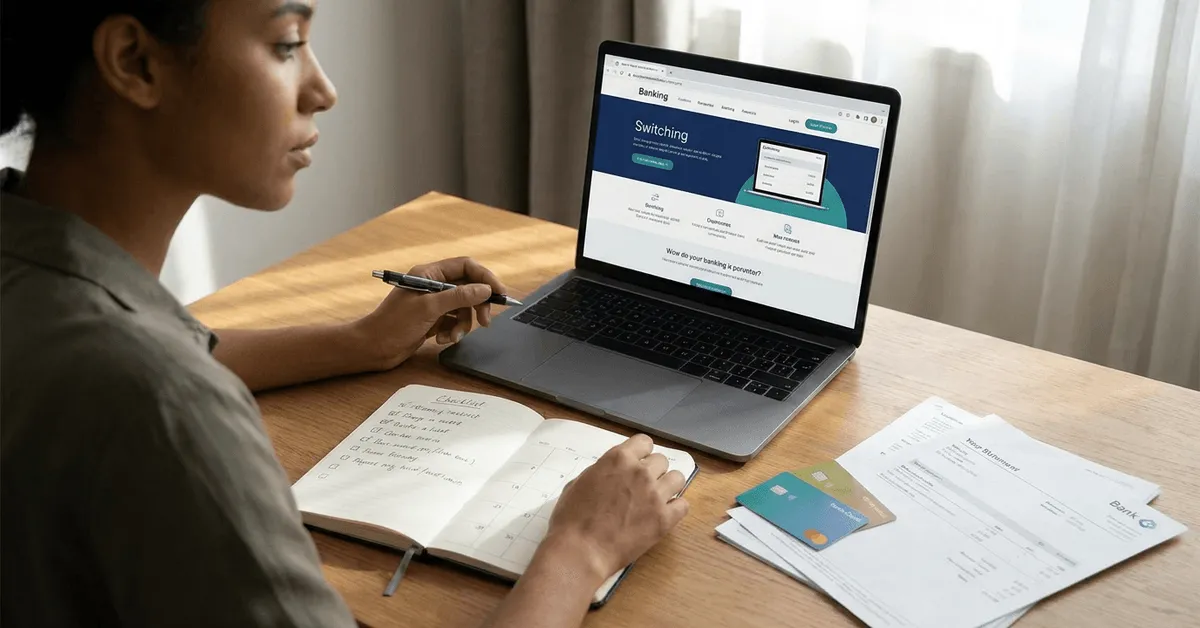
Banking rules vary across countries, so no single switching process fits everyone. The framework below highlights what generally matters and where local requirements deserve closer attention.
What Switching Banks Actually Involves
A bank account connects several parts of your financial life. Beyond your visible balance, it may hold payment instructions, saved beneficiaries, transaction records, and links to other services.
Moving money alone does not necessarily move those connections. An employer may keep using old account details, while a subscription provider may continue charging a debit card that no longer works.
Some countries offer a formal bank account switching service that transfers eligible payment instructions. Elsewhere, customers generally arrange the changes themselves, often provider by provider.
Even an automated service can have exclusions. Card subscriptions, international payments, digital wallets, and certain linked products may still require separate updates or additional confirmation.
Compare the New Bank Against Your Actual Needs
A lower monthly charge can be attractive, but it is only one part of the decision. The better comparison includes the services you use regularly and the costs that appear during an ordinary month.
For someone paid internationally, foreign exchange pricing may matter more than branch access. For someone handling cash, convenient deposits and withdrawal limits may carry considerably more weight.
Promotional offers can distract from these practical details. A temporary reward rarely compensates for ongoing transfer charges, poor support, or an account that does not support essential payments.
| Feature | What matters | Potential disruption |
|---|---|---|
| Account fees | Monthly charges, minimum balances, and waiver conditions | Unexpected recurring costs |
| Payment services | Local transfers, direct debits, and international payments | Unsupported bills or incoming transfers |
| Cash access | ATM networks, withdrawal fees, and deposit options | Difficulty accessing or depositing cash |
| Digital banking | App reliability, security tools, and payment limits | Delayed access or blocked transactions |
| Customer support | Contact methods, operating hours, and dispute handling | Slower help when payments fail |
Check Eligibility and Deposit Protection Before Moving Money
Account availability often depends on residence, age, identity documents, and sometimes income or employment. A bank serving international customers may still restrict particular accounts by country.
Applications commonly require proof of identity and address, along with tax residency information. Additional checks can extend the opening process, especially after a move or a change in personal details.
Deposit protection also deserves attention. Coverage depends on the jurisdiction, the institution, the type of account, and applicable limits; several brands may share one banking licence.
A banking app is not automatically a deposit-taking bank. Some payment and electronic money providers use safeguarding arrangements instead, which differ from statutory deposit insurance in important ways.
The International Association of Deposit Insurers offers background on deposit insurance. Local scheme rules remain the key source for coverage limits and eligibility.
Create a Payment Inventory Before Changing Accounts
A useful starting point is several months of statements, with a longer review for annual expenses. Insurance renewals, memberships, and occasional transfers are easy to miss during a quick account check.
The inventory works best when it separates incoming money from outgoing commitments. That distinction makes it easier to see whether the new account can receive funds before bills begin leaving it.
Incoming Payments Worth Reviewing
- Salary, wages, pensions, and government benefits.
- Freelance income, client payments, and marketplace payouts.
- Rent received, investment distributions, and regular family transfers.
- Expected tax refunds, reimbursements, and outstanding merchant refunds.
Outgoing Payments and Linked Services
- Rent, mortgage payments, utilities, and insurance premiums.
- Credit card repayments, loan instalments, and scheduled transfers.
- Streaming services, memberships, and other recurring card charges.
- Digital wallets, investment platforms, and payment applications.
A simple tracker can show the provider, usual payment date, update method, and confirmation status. Recording the first successful transaction adds stronger evidence than an account details change alone.
Open and Test the Replacement Account First
The old account generally remains useful until the new one is fully operational. Approval alone may not mean that cards, online access, transfer permissions, and identity checks are all complete.
A small transfer can help confirm that the new account receives money correctly. A separate outgoing payment can reveal transfer limits, beneficiary checks, or processing delays before larger sums move.
Testing a debit card and any essential cash access can also prevent inconvenience later. Some cards need activation, and certain payment features become available only after an initial transaction.
Security settings deserve the same early attention. Strong authentication, current recovery details, and transaction alerts can make unfamiliar account activity easier to notice during the transition.
Move Salary and Other Income Before Redirecting Major Bills
Updating salary payments is often the most important scheduling task. Employers and payroll providers may have processing cutoffs, so a late change might not take effect until the next pay cycle.
Written confirmation from payroll can reduce uncertainty, although the first successful deposit provides better reassurance. Until then, the old account may still need to remain available for incoming money.
Benefits, pensions, and client payments can follow different update procedures. Some organisations require a secure portal, a signed form, or additional verification before accepting new banking details.
Sharing updated details through a trusted channel also matters. Unexpected email requests involving bank accounts can resemble payment fraud, so clients may reasonably want independent confirmation.
Update Direct Debits, Standing Orders, and Card Subscriptions
Not all recurring payments work the same way. A direct debit usually authorises an organisation to collect money, while a standing order is typically a recurring transfer controlled through your bank.
Recurring card payments are different again. They depend on stored card details, so moving a direct debit or closing an account does not necessarily update a subscription linked to the old card.
Each provider may have its own notice period and billing cutoff. A change made close to collection day could affect the following bill rather than the one already scheduled for processing this month.
Recreating a standing order before cancelling the original can produce duplicate payments. A clear start date for the replacement and a confirmed end date for the original can reduce that risk.
Cancelling a payment instruction does not cancel the underlying contract or debt. Insurance, utilities, loans, and subscriptions may still require payment even when the collection method has changed.
Keep Enough Money Available During the Overlap
A temporary overlap between accounts can make switching less stressful. Its length depends on payment schedules, local switching arrangements, and whether any uncertain transactions remain outstanding.
There is no universal buffer amount. A practical estimate includes expected bills from the old account, pending transactions, possible account charges, and a little room for a payment that arrives late.
Maintaining two accounts is not always free, however. Minimum balance requirements and maintenance charges may apply, so the overlap needs to balance payment reliability against unnecessary costs.
If spare cash is limited, timing becomes more important. Moving payments shortly after confirmed income arrives may help, provided enough remains available wherever the next scheduled bills will be collected.
Understand What an Automated Switching Service Covers
Where an official switching scheme exists, participating banks may transfer eligible payments and arrange account closure. Some schemes also redirect certain payments sent to the former account details.
The exact protections depend on the scheme rather than the phrase “easy switching.” Eligibility, completion times, redirection periods, and compensation rules can differ substantially between countries.
Cross-border moves often fall outside domestic switching arrangements. A new currency, local account format, or payment network can require employers and billers to establish entirely new instructions.
A full switch may also close the old account automatically. That can be unsuitable when the account supports another product or still needs to receive a refund, so the service terms deserve a close review.
Check Credit, Overdrafts, and Linked Banking Products
Changing a transaction account does not automatically transfer an overdraft, loan, or credit card. Those products may require separate applications, repayment arrangements, or continued access to the old bank.
An outstanding overdraft normally needs an agreed resolution before account closure. A replacement overdraft is a new credit decision, not a guaranteed feature of moving your everyday banking elsewhere.
The effect on your credit record depends on local reporting practices and the products involved. Credit applications may trigger checks, while missed repayments can matter more than the account move itself.
Linked benefits can change too. Mortgage discounts, savings rates, insurance features, and fee waivers may depend on holding a particular account or meeting ongoing salary and balance requirements.
Close the Old Account Only After Final Checks
Closure is easier when incoming payments have arrived correctly and essential bills have cleared from the new account. Pending card transactions, unpresented cheques, and unresolved disputes may need more time.
Expected refunds deserve particular care because merchant and bank processes differ. A refund might reach a replacement account, be returned, or require investigation; automatic forwarding is not universal.
Statements and important documents may become harder to retrieve after closure. Downloaded records can support tax reporting, expense claims, payment disputes, and questions about historical transactions.
- Income has reached the replacement account successfully.
- Essential recurring payments have cleared as expected.
- Pending transactions, refunds, and account charges have been reviewed.
- Linked products and any outstanding borrowing have been addressed.
- Statements have been saved and closure confirmation has been requested.
A zero balance does not necessarily mean an account is closed. Formal confirmation helps establish the closure date and provides a useful record if later correspondence or unexpected charges appear.
Using an Official Bank Application Page
For readers ready to apply, the safest route is generally a bank’s verified website or official app. Advertisements, unsolicited messages, and third-party forms can introduce unnecessary privacy and fraud risks.
For eligible UK readers, HSBC UK’s official Bank Account application page provides a route to review requirements and apply directly.
This is a country-specific example, not a recommendation or a promise of approval. Readers elsewhere would need a locally available account, with eligibility, fees, and protection checked before applying.
A Smooth Bank Switch Depends on Sequence, Not Speed
The strongest answer to how to switch banks without disrupting your finances is a controlled handover. New account access comes first, followed by income, recurring payments, and final closure checks.
A successful switch should leave everyday finances easier to manage, not merely located somewhere new. Careful timing and confirmed payments matter far more than finishing the process a few days sooner.
With a clear payment inventory and enough overlap for your circumstances, changing banks can be a manageable administrative task. The goal is continuity: money arriving, bills clearing, and access staying reliable.