Saving for retirement on a small income can feel unrealistic when rent, food, and transport already stretch the budget. Yet getting started does not have to involve a large monthly commitment.
This guide is for workers, caregivers, freelancers, and households with limited spare cash. It explains how to balance immediate needs with retirement planning, wherever you happen to live.
The aim is not to find a perfect savings percentage overnight. It is to create a manageable system, understand your local options, and gradually give your future self more financial breathing room.
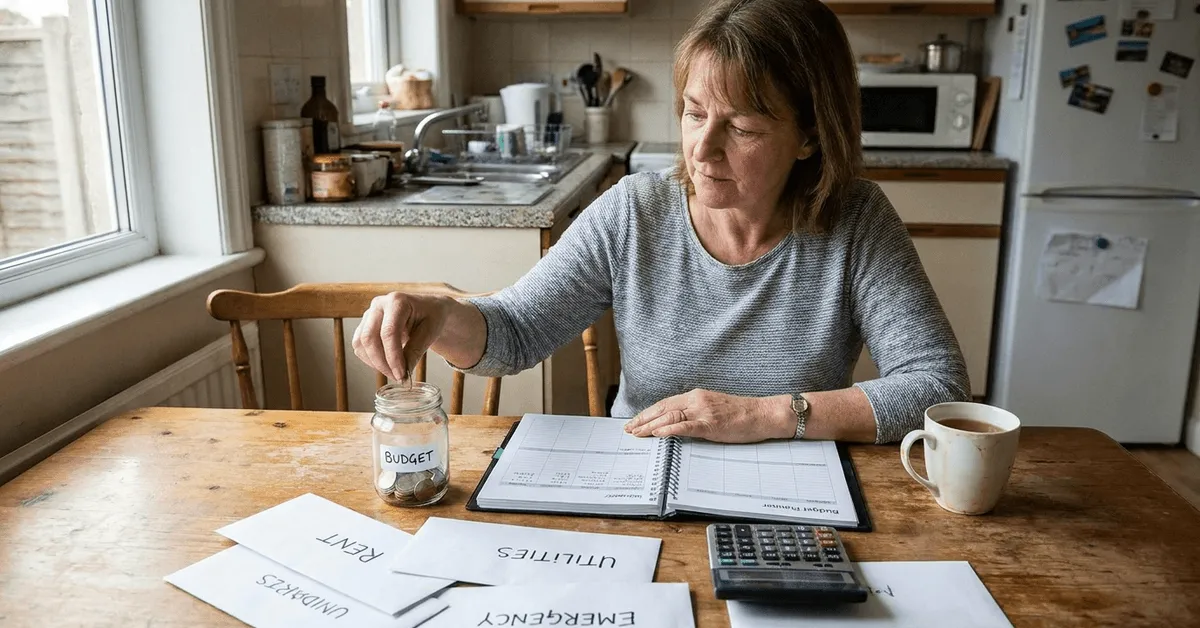
What Retirement Saving Looks Like on a Limited Budget
Retirement saving means setting aside money that can support you when paid work slows down or stops. Depending on your country, that support may combine public benefits, employer pensions, and investments.
A small income changes the pace, but not the basic process. Essential bills come first, followed by protection against financial shocks and contributions that your current budget can reasonably support.
There is no universal minimum that makes saving worthwhile. Account fees, local rules, and your financial position matter more than reaching a number borrowed from someone with a very different income.
For some households, the first meaningful step is contributing a little each month. For others, it is reducing expensive debt or confirming pension eligibility before committing money to a long-term account.
Finding a Retirement Contribution You Can Actually Afford
A realistic budget starts with essential spending
A useful starting point is the money left after housing, basic food, utilities, healthcare, and necessary transport. Annual expenses also matter, even when they do not appear on every monthly statement.
Insurance renewals, school costs, repairs, and seasonal bills can quietly consume apparent spare cash. Setting aside a monthly share for these expenses gives a more honest picture of your saving capacity.
If nothing remains, that is a budget constraint rather than a personal failure. Benefit eligibility, debt support, or a change in income may need attention before regular retirement contributions become practical.
A small contribution can be a sensible starting point
An affordable contribution might be 1% of income, a small fixed amount, or a share of occasional earnings. The right starting amount is one that does not repeatedly push essential expenses onto expensive credit.
For example, saving 10 from a monthly income of 1,000 represents 1% of income. That is a modest beginning, certainly, but it creates a repeatable habit and a clear baseline for future adjustments.
| Monthly contribution | Annual contribution | Total over 10 years |
|---|---|---|
| 10 | 120 | 1,200 |
| 25 | 300 | 3,000 |
| 50 | 600 | 6,000 |
These figures show contributions only, not a forecast of retirement income. Investment performance, inflation, taxes, and account charges can all change what the money eventually buys in retirement.
Balancing Emergency Savings, Debt, and Retirement
Accessible savings help protect long-term money
An unexpected bill can undo months of progress if the only available money sits in a restricted pension account. A separate, accessible emergency fund can reduce the chance of borrowing or withdrawing early.
The first emergency savings target can be modest: perhaps enough for a common repair or an essential bill. A larger reserve may become possible later, particularly if your income is irregular or uncertain.
Expensive debt deserves a place in the calculation
High-interest borrowing can cost more than investments are reasonably expected to earn. Reducing that debt may therefore improve your position more reliably than increasing retirement contributions immediately.
Employer contributions can complicate that choice, however. A valuable pension match may justify some saving alongside debt repayment, provided minimum payments and essential living costs remain affordable.
- Essential bills and required debt payments generally take priority.
- A small cash reserve can help prevent fresh borrowing.
- Employer matching contributions deserve a close look.
- High-cost debt may warrant faster repayment.
- Additional retirement saving can grow as financial pressure eases.
Understanding Retirement Accounts in Your Country
Retirement accounts are not interchangeable across borders. Tax advantages, government incentives, withdrawal restrictions, and investment protections depend on local law and sometimes your employment status.
Names also vary considerably. Examples include workplace pensions in the United Kingdom, superannuation in Australia, retirement plans and IRAs in the United States, and provident funds in several countries.
A sensible comparison looks beyond the account name. Eligibility, total fees, employer payments, tax treatment, and access rules usually matter more than a provider's headline description or advertised features.
Workplace pensions and employer contributions
Where an employer offers matching contributions, your own saving may unlock additional money. The formula matters: some employers match only up to a limit, while others contribute without requiring a match.
Vesting rules may also apply, meaning employer contributions become fully yours only after certain conditions are met. Your own contributions and the employer's payments can have different ownership rules.
Personal accounts and self-employed options
People without a workplace plan may have access to individual pensions or other approved savings accounts. Local tax authorities and pension regulators are useful sources for checking which arrangements qualify.
A tax deduction is not automatically the best benefit for someone on a low income. Refundable credits, government contributions, or lower-fee alternatives may be more valuable, depending on the local system.
Choosing Investments Without Taking Unnecessary Risks
A pension or retirement account is often a container rather than an investment itself. Money inside it may hold cash, bonds, shares, funds, or a default portfolio, each with a different level of risk.
Diversification spreads money across investments rather than relying on one company or asset. It can reduce concentration risk, although it cannot prevent every loss or guarantee positive returns.
Broadly diversified, low-cost funds can be worth considering when suitable options are available. Their usefulness depends on local charges, investment coverage, your time horizon, and your tolerance for losses.
Money needed soon generally requires a different approach from money intended for decades later. A long horizon can allow more time to recover from downturns, but it does not make investment risk disappear.
Some retirement plans offer target-date or lifecycle funds that change their investment mix over time. These can simplify decisions, although funds with similar dates may have quite different fees and risk levels.
Why fees matter especially for small balances
A fixed annual charge can take a large percentage of a small account. For example, a fee of 24 on a balance of 300 equals 8% of that balance before any investment charges or changes in market value.
Percentage-based charges matter too, especially over many years. Comparing the full cost of administration, underlying investments, transactions, and transfers gives a clearer picture than a single advertised fee.
Making Small Contributions Easier to Maintain
Automation works best when the timing fits
A small automatic transfer shortly after payday can make saving more consistent. The amount still needs enough flexibility to avoid overdrafts, missed bills, or borrowing when a month becomes unusually expensive.
For someone paid weekly, smaller weekly contributions may feel easier than one monthly payment. For irregular earnings, a percentage of each payment can work better than a fixed commitment on the same date.
Occasional income can support the plan
A tax refund, bonus, gift, or stronger month of freelance work can create room for an extra contribution. There is no need to allocate all of it when overdue essentials or emergency savings also need attention.
Splitting extra income between present needs and future savings can make the process more sustainable. The exact split matters less than avoiding a plan so restrictive that it becomes difficult to continue.
Pausing contributions during unemployment or a serious financial setback does not erase earlier progress. Restarting with a smaller amount may be more useful than trying to recover every missed payment at once.
Allowing for Inflation and Uneven Progress
Inflation reduces purchasing power over time, so a future account balance may buy less than the same amount buys today. That is one reason contribution totals alone cannot measure retirement readiness.
Gradual increases can help when income permits. Adding a small amount after a pay rise or after a debt is repaid may feel more manageable than making a large increase while the budget is already stretched.
Investment growth is uneven, and some years may end with a lower balance despite regular contributions. Short-term losses do not automatically mean the plan is wrong, though suitability still deserves review.
A practical review might happen annually or after a major life change. The useful questions concern affordability, fees, investment risk, and eligibility for support, rather than daily movements in the markets.
Checking Public Pension Entitlements and Official Applications
Public retirement benefits may form an important part of future income, especially for lower earners. Checking your contribution record can reveal missing periods, qualification gaps, or errors worth investigating.
Some countries provide pension credits for eligible caregiving, unemployment, or other circumstances. These arrangements are not universal, but checking the rules may uncover support that is easy to overlook.
Readers approaching retirement who may qualify for U.S. benefits can explore an application through the official Social Security application service, which explains the available routes.
That service concerns benefit applications, not opening a retirement savings account. Readers elsewhere may find their own national pension agency more relevant, with eligibility and application procedures varying locally.
Avoiding Retirement Savings Scams and Costly Shortcuts
Offers promising guaranteed high returns, special access, or rapid retirement wealth deserve skepticism. A professional-looking website does not establish that a provider is authorized, solvent, or suitable for you.
Provider registration can usually be checked through the relevant financial regulator. The legal business name matters, since fraudsters sometimes imitate genuine firms and use nearly identical website addresses.
Pressure to transfer a pension quickly is another warning sign. Moving money can involve exit charges, tax consequences, or the loss of valuable guarantees, even when the receiving provider is legitimate.
- Unsolicited requests for passwords or verification codes are warning signs.
- Claims of risk-free, unusually high returns deserve scrutiny.
- Fees and withdrawal conditions should be understandable before an application.
- Regulated advice may be useful for complex transfers or cross-border situations.
Conclusion: A Small Start Can Create More Retirement Options
Saving for retirement on a small income is less about finding spare money everywhere and more about making careful trade-offs. Affordable contributions, manageable fees, and suitable accounts can support steady progress.
Some months, progress may mean adding to a pension. In others, it may mean avoiding new debt, protecting emergency savings, or correcting a public pension record. Those steps can support the same long-term goal.
A small balance will not solve every retirement challenge, and there are no guaranteed outcomes. Still, a plan that fits your real circumstances creates a foundation that can strengthen as your finances change.
This article provides general financial education, not personalized investment, tax, or legal advice. Local rules and individual circumstances can materially change which retirement choices are suitable.