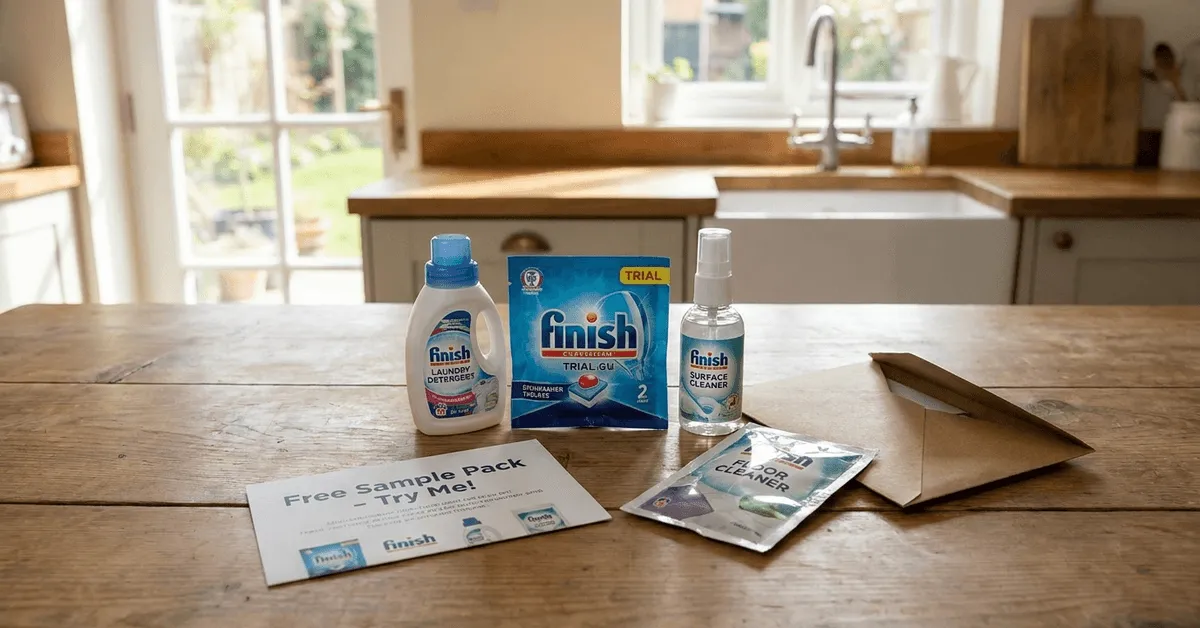
Finding free vitamins and supplement samples can feel confusing. Some offers come directly from established manufacturers. Others involve shipping charges, subscriptions, or unclear terms.
This guide is for adults comparing legitimate sample offers. It explains where these opportunities appear and how they work. The aim is better decisions, not a longer supplement shopping list.
A small trial pack may reveal whether a product is convenient. It cannot establish that a supplement is necessary or effective. That distinction matters, especially when health claims sound impressive.
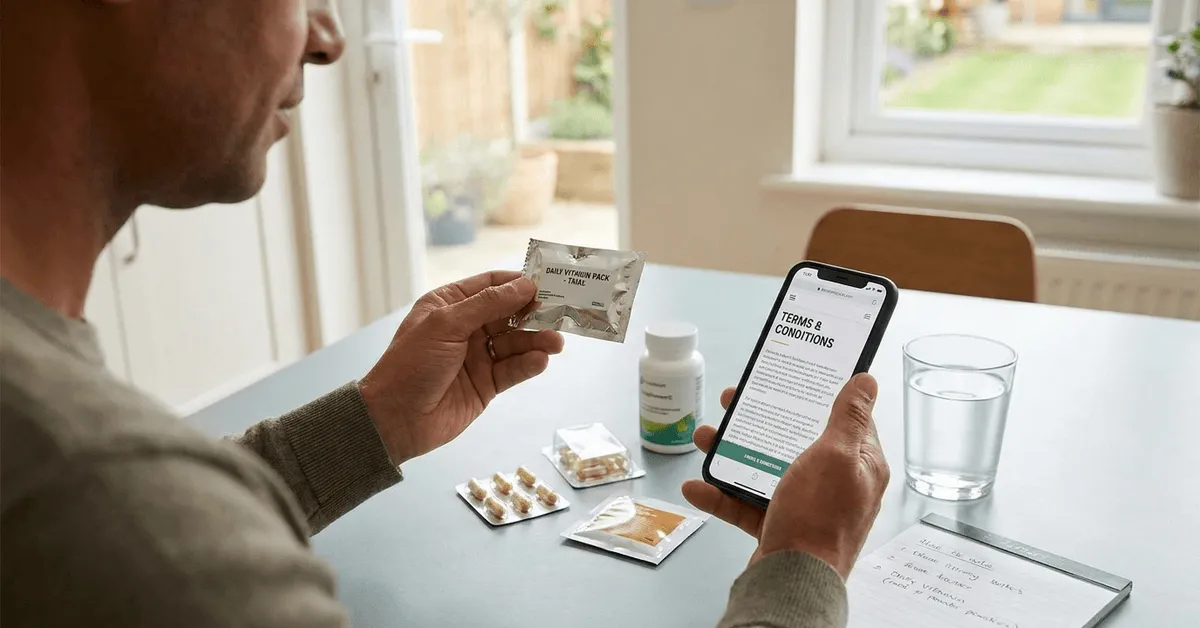
What Are Free Vitamins and Supplement Samples?
Supplement samples are limited quantities offered for evaluation. They may contain tablets, capsules, gummies, powders, or liquids. The package usually provides fewer servings than a regular retail product.
Brands distribute samples to introduce products and gather feedback. Some programs send individual sachets, while others assemble boxes. The contents depend on the campaign, stock levels, and recipient eligibility.
The word free does not always describe the entire transaction. A product might cost nothing while delivery or membership costs extra. A genuinely no-cost offer has no required payment attached to receiving it.
There is also a difference between sampling and financial assistance. Samples are generally marketing offers, not ongoing health support. They are an unreliable source for anyone who needs a consistent supplement supply.
Where Legitimate Supplement Sample Offers Appear
Official Manufacturer Websites
Manufacturer websites sometimes host short-term sampling campaigns. These may accompany a product launch or a specific marketing event. Availability can change quickly, even when an older announcement remains online.
An authentic offer normally identifies the company behind the product. Its conditions explain eligibility, delivery restrictions, and quantities. A published privacy policy also clarifies how submitted information may be used.
Customer service teams may confirm whether a promotion is genuine. However, contacting a company does not create an entitlement to samples. Many manufacturers provide product information without operating a sampling program.
Established Consumer Sampling Platforms
Consumer sampling platforms connect brands with eligible households. Participants usually create profiles and answer screening questions. Matches depend on the campaign rather than simply the order of registration.
These services may distribute food, personal care, or wellness products. Vitamins and supplements are only possible categories, not guaranteed contents. Membership alone does not establish that a suitable offer is currently available.
Some platforms request feedback after a package has been delivered. That feedback may cover packaging, flavor, or the overall experience. Honest participation does not require positive claims about a product's health effects.
Pharmacies, Retail Events, and Professional Settings
Pharmacies and wellness retailers occasionally host brand events. A participating location may distribute sealed promotional products. Stock and eligibility often differ between branches, even within the same retail chain.
Some healthcare settings also receive manufacturer-provided samples. Distribution depends on the practitioner, the product, and local rules. A sample offered in a clinical setting still requires an individual suitability assessment.
How Supplement Sampling Applications Usually Work
A typical application begins with basic contact and delivery details. Some campaigns also ask about age, shopping habits, or product interests. The information helps determine whether an applicant matches the intended audience.
Screening questions do not necessarily signal that an offer is suspicious. However, requests for detailed medical records deserve closer scrutiny. The sensitivity of the information should make sense for the stated purpose.
Successful registration may lead to an invitation rather than a shipment. Applicants sometimes complete another questionnaire before selection. Neither an account confirmation nor a promotional email guarantees sample delivery.
Delivery times vary with campaign schedules and fulfillment arrangements. Tracking may be unavailable for small packages sent through regular mail. A legitimate program should still provide clear information about its general process.
Household limits are common because promotional stock is usually finite. Multiple accounts or inaccurate details can violate participation terms. Selection is often based on eligibility, so repeated applications may provide no advantage.
Free Samples, Free Trials, and Cashback Are Different
A free supplement sample is generally a small promotional quantity. A free trial may involve a full product and an ongoing subscription. The wording can sound similar even though the financial commitments are very different.
Cashback promotions normally require payment before reimbursement. Eligibility may depend on a receipt, an approved retailer, and deadlines. That arrangement is not equivalent to receiving a sample without spending money first.
A voucher may reduce the price without covering the entire purchase. Delivery fees, taxes, or minimum basket values can leave a balance. The useful comparison is the total amount payable, not the size of the advertised discount.
Offers described as free samples with free shipping need clear terms. A request for payment details changes the risk calculation considerably. The checkout terms determine whether any immediate or recurring charges are authorized.
Warning Signs of Misleading Supplement Offers
Unrealistic medical promises are a major warning sign in any promotion. A sample cannot credibly promise to cure disease or replace treatment. Testimonials and dramatic before-and-after images do not establish reliable clinical evidence.
Artificial urgency can make a questionable offer feel unusually attractive. Countdown timers and repeated warnings about disappearing stock add pressure. They provide no independent evidence that the product or the promotion is trustworthy.
Impersonation pages sometimes copy familiar logos and product photographs. A professional-looking design does not prove that a brand runs the page. The website address and the company's own published information provide stronger context.
Large rewards for a very small action can conceal a complicated funnel. Survey chains may redirect visitors through unrelated third-party websites. A clear sampling offer identifies what is being provided and who is responsible for delivery.
Requests for bank passwords or one-time security codes are serious concerns. Those credentials are unrelated to mailing an ordinary product sample. HTTPS encrypts a connection, but the padlock alone does not establish that a business is honest.
Why Availability Changes Around the World
Free supplement samples are not available under one worldwide system. Brands choose markets according to distribution plans and local requirements. An offer visible internationally may still accept delivery addresses in only one country.
Products can also fall into different regulatory categories across borders. An ingredient sold as a supplement somewhere may face restrictions elsewhere. Familiar branding does not establish that the same formula is permitted in every destination.
Cross-border deliveries may create costs even when the product is free. Import duties, taxes, handling charges, or inspection fees may apply. Whether a charge arises depends on the destination, shipment, and applicable local rules.
International forwarding services do not remove campaign restrictions. They can introduce extra fees and complicate storage or product tracing. A locally eligible offer generally involves fewer uncertainties than an overseas promotion.
Language also affects how useful a sample will be after it arrives. Directions, warnings, and ingredient names need to be understandable. A translated advertisement is not necessarily a substitute for complete, compliant product labeling.
What a Sample Can Tell You About a Product
A small sample can reveal practical details about the user experience. Capsule size, flavor, texture, and packaging may become apparent quickly. These observations can help distinguish a convenient format from one that feels unsuitable.
It cannot reliably establish whether a supplement improves your health. Many outcomes require appropriate testing, longer observation, or both. Feeling different after one serving does not demonstrate that the product caused the change.
The sample may also differ from the product eventually sold in stores. Serving counts, packaging, and even formulations can change over time. The relevant comparison is the current retail label rather than an older promotional description.
A product being pleasant to take does not establish that it is necessary. Nutrition needs vary with diet, life stage, health, and other factors. The commercial reason for offering a sample is separate from an individual's reason for using it.
Health and Label Checks That Matter
Free does not mean risk-free , even when a product looks familiar. Supplements can cause adverse effects or interact with medicines. Multiple products may also contain the same nutrients, increasing the total amount consumed.
The label provides information that advertising often leaves in the background. Serving size, ingredient amounts, warnings, and allergens all matter. A single packet may contain more than one serving, depending on how the manufacturer defines it.
Blends can make product comparisons harder when individual amounts are unclear. A longer ingredient list is not automatically a sign of better quality. Botanical extracts and concentrated formulas can have meaningful effects despite natural branding.
Packaging condition matters as much as the appearance of the product itself. Broken seals, missing labels, or unclear expiry information create uncertainty. Individual sachets should still provide enough traceable information to identify what they contain.
Pregnancy, breastfeeding, childhood, and chronic illness require extra care. Professional guidance is especially relevant when medicines are involved. A pharmacist or qualified clinician can assess issues that a sampling questionnaire cannot resolve.
The FDA's dietary supplement information explains key U.S. safety principles. Its guidance also describes important limits of supplement oversight. Other countries have their own regulators and requirements, which may differ substantially.
Privacy and the Real Cost of Free Products
Personal information is often part of the exchange behind a free sample. Companies may use registration details for marketing and audience research. The privacy notice explains whether information is shared and what choices participants have.
Health-related answers can be more sensitive than ordinary shopping preferences. An optional question may still invite information worth keeping private. The amount requested should be proportionate to the purpose and clearly explained by the organizer.
Marketing consent and operational messages serve different purposes. Delivery updates concern an application, while newsletters promote future offers. Whether these choices can be separated depends on the program and the applicable privacy rules.
Time is another cost that rarely appears in a promotional headline. Repeated surveys, account management, and follow-up tasks can add up. A tiny sample may offer little practical value when obtaining it requires substantial effort.
An Official Place to Register for Sampling Opportunities
SampleSource is a consumer sampling service with an official registration route. Its available campaigns and eligibility requirements can change over time. It is not a worldwide vitamin assistance program or a guaranteed source of supplement samples.
Adults interested in applying can visit the official SampleSource website. Registration and current participation terms are available through the service. Any vitamin or supplement offer depends on an eligible campaign actually being available.
That distinction keeps expectations realistic before personal details are shared. A platform may be genuine while offering no relevant samples at present. The current campaign information, rather than an old online list, determines what can be requested.
Frequently Asked Questions About Free Vitamin Samples
Can You Get Free Vitamins Without Paying Shipping?
Some campaigns cover both the product and delivery, but others do not. The offer terms should identify any payment required before fulfillment. When delivery charges apply, the sample may be free while the overall transaction still costs money.
Are Free Supplement Samples Available Worldwide?
There is no single verified program that guarantees samples everywhere. Most campaigns specify eligible countries, regions, or delivery areas. Local regulations and brand distribution arrangements help determine where an offer can operate.
Does Receiving a Sample Mean the Product Is Safe?
Receiving a sample does not establish its suitability for a particular person. Safety depends on the ingredients, dose, product quality, and circumstances. A legitimate promotion cannot rule out allergies, interactions, or other individual health concerns.
Can Sample Packs Replace a Regular Supplement Supply?
Sample packs are usually too limited and unpredictable for ongoing use. Campaigns can end suddenly, and replacement supplies are not guaranteed. Prescribed or professionally recommended supplementation needs a reliable plan beyond occasional offers.
Conclusion: The Best Free Sample Has Clear Terms and Real Value
Free vitamins and supplement samples can offer a modest, practical benefit. They allow a closer look at a format without buying a full-size product. The value comes from a transparent offer, not from promises that a small sample cannot support.
A trustworthy opportunity makes its organizer, costs, and limits understandable. It respects privacy and avoids exaggerated claims about health outcomes. Even then, personal suitability remains more important than the appeal of receiving something free.
The strongest approach combines realistic expectations with health awareness. Samples are optional product introductions, not proof of a nutritional need. A worthwhile offer leaves you better informed without an unwanted charge or an unnecessary commitment.