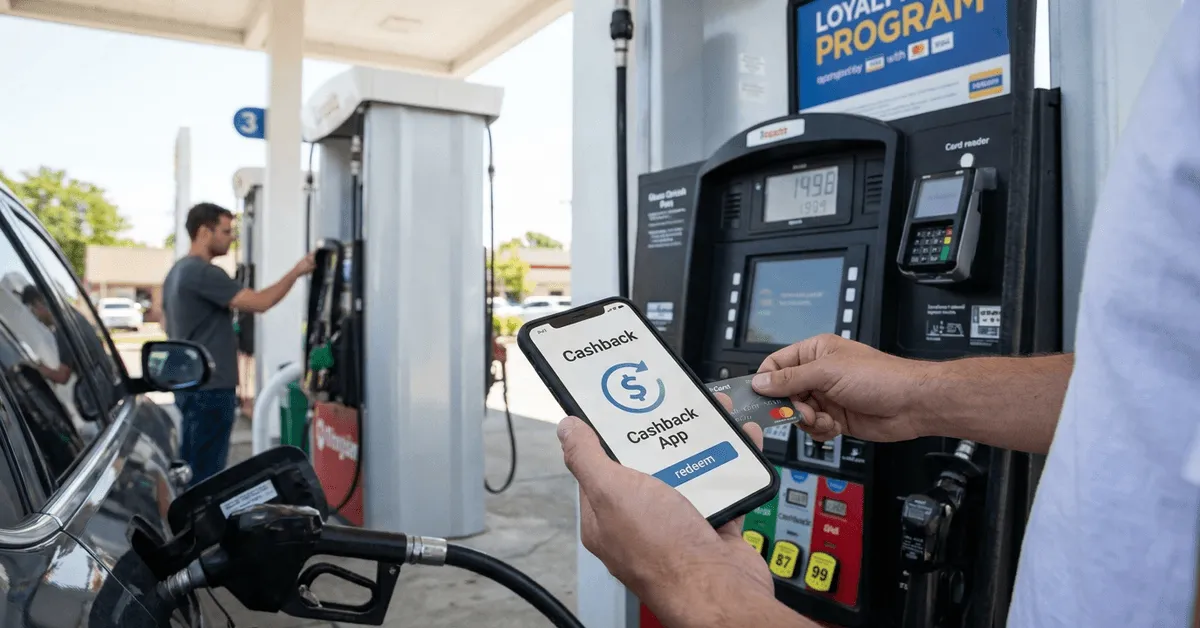
Cashback credit cards return a small share of eligible spending as rewards. That sounds straightforward, but interest, fees, and redemption rules can change whether those rewards actually save money.
This guide is for anyone comparing a first rewards card or questioning an existing one. It explains the calculations, common restrictions, and everyday habits that can protect the value of cashback.
Although these cards exist in many countries, their terms are not universal. Local regulations, issuer policies, and payment networks all influence what you earn and how much using the card might cost.

What Are Cashback Credit Cards?
A cashback credit card is a borrowing product with a rewards feature. You make purchases using an approved credit limit, and the issuer awards cash or cash-equivalent rewards on qualifying transactions.
The reward is usually calculated as a percentage of eligible spending. A card offering 1.5% cashback would generate 15 in rewards on 1,000 of qualifying purchases, before any applicable limits or adjustments.
That example works in dollars, euros, pounds, or another billing currency. The arithmetic stays the same, although available reward rates and the purchasing power of the resulting cashback vary by market.
Cashback is not a discount at checkout unless the program specifically works that way. Usually, the purchase posts first, and rewards become available later under the issuer's processing schedule.
Why Issuers Offer Cash Rewards
Card issuers use rewards to attract customers and encourage card usage. Their revenue can include transaction-related fees, annual fees, and interest, although the business model differs across markets.
There is no requirement to pay interest simply to earn cashback. With an eligible purchase grace period, paying the full statement balance by its due date can generally avoid purchase interest charges.
How Cashback Rates and Reward Categories Work
The advertised cashback rate rarely explains the entire program. A card may apply different rates to different purchases, impose spending caps, or reserve its highest rewards for selected merchants.
| Reward structure | How it works | Main limitation |
|---|---|---|
| Flat-rate cashback | One standard rate on most eligible purchases | The rate may be lower than category bonuses |
| Tiered cashback | Higher rates in specified spending categories | Merchant classification determines eligibility |
| Rotating categories | Bonus categories change periodically | Activation and spending caps may apply |
| Merchant offers | Additional rewards at participating businesses | Enrollment, exclusions, and expiry dates may apply |
Flat-Rate Cashback
Flat-rate cashback is often easier to understand because eligible purchases earn the same percentage. It can suit people whose spending is spread across groceries, transport, utilities, and other categories.
Simplicity still has limits. Cash advances, balance transfers, fees, and certain cash-like transactions commonly earn nothing, so a flat rate does not necessarily apply to every entry on your statement.
Bonus Categories and Merchant Codes
Category cards may pay more for groceries, dining, fuel, or other designated purchases. The issuer normally relies on merchant classification data rather than reviewing the individual products you buy.
A supermarket purchase inside a department store may therefore earn the standard rate rather than a grocery bonus. Payment intermediaries and digital wallets can also affect eligibility under some programs.
Caps, Activation, and Promotional Rates
A headline rate of 5% might apply only to a limited amount of quarterly spending. Once that cap is reached, additional purchases may earn a lower rate or no further category bonus, depending on the terms.
Some programs require activation before bonus rewards become available. Introductory rates may also expire, making the ongoing reward structure more important than an unusually generous opening offer.
How to Calculate the Real Value of Cashback
The useful number is not the highest advertised percentage. It is the amount left after fees, interest, and other incremental costs, based on purchases you would reasonably have made without rewards.
A practical estimate is net cashback value = earned rewards minus annual fees, interest, and additional card-related costs . Welcome bonuses are best assessed separately because they usually happen only once.
A Simple Annual Comparison
Suppose a card earns 2% on 12,000 of eligible annual spending. It produces 240 in rewards before costs. If its annual fee is 80, the remaining value is 160, assuming no interest or other additional charges.
A no-annual-fee card earning 1.5% on the same purchases would return 180. In this example, the lower advertised rate delivers more net value, even though the premium card initially looks more rewarding.
| Illustrative feature | Card A | Card B |
|---|---|---|
| Annual eligible spending | 12,000 | 12,000 |
| Cashback rate | 2% | 1.5% |
| Annual rewards | 240 | 180 |
| Annual fee | 80 | 0 |
| Net value before other costs | 160 | 180 |
These figures are hypothetical and use unspecified currency units. They exclude welcome offers, taxes, category caps, and noncash benefits, which could change the comparison for a particular cardholder.
Finding the Annual-Fee Break-Even Point
When comparing otherwise similar cards, the extra annual fee divided by the extra reward rate gives an approximate break-even spending level. Percentages need to be expressed as decimals for this calculation.
For an 80 fee and a 0.5-percentage-point advantage, the calculation is 80 ÷ 0.005 = 16,000. Above that eligible annual spending, the higher-rate card starts to offset its fee, assuming all else stays equal.
Why Interest Can Outweigh Cashback Rewards
Credit card interest can exceed the value of rewards surprisingly quickly. Cashback is generally earned once on a purchase, while interest may continue accumulating whenever an unpaid balance remains.
As a rough illustration, a 1,000 balance at a 24% annual rate could incur about 20 in interest over a month. That equals the entire 2% cashback earned on 1,000 of eligible spending, before other costs.
Actual interest depends on daily balances, payment timing, the issuer's calculation method, and local rules. The example is only an approximation, but it shows why a reward rate alone is not enough.
Statement Balance Versus Minimum Payment
The statement balance is the amount shown when a billing cycle closes. The minimum payment is only the smallest required payment, and paying it usually leaves a balance that can attract interest.
Paying the full statement balance by its due date generally preserves purchase interest benefits when a grace period applies. Existing carried balances can complicate this, including through residual interest.
Automatic payments may reduce missed-payment risk, provided the linked account has sufficient funds. Alerts and occasional statement reviews remain useful because automation cannot catch every billing problem.
How Cashback Redemption Works
Earning rewards and receiving usable money are separate steps. Depending on the issuer, cashback may be available as a statement credit, a bank deposit, a mailed payment, or another approved redemption option.
A statement credit reduces the account balance, but it may not count toward the required minimum payment. The issuer's payment rules still apply even when recently redeemed cashback appears on the account.
Some programs redeem rewards automatically, while others require a request. Minimum redemption thresholds, processing delays, account-standing requirements, and expiry rules can all affect accessibility.
- Redemption value: whether each reward unit has a fixed cash value.
- Minimum threshold: how much must accumulate before redemption.
- Expiry policy: whether unused rewards can expire.
- Account closure: whether remaining rewards are forfeited.
- Refund treatment: whether returned purchases reverse earned cashback.
Programs that describe rewards as points may still offer cashback, but conversion values can differ. Comparing the actual cash received per unit of spending is more reliable than comparing point totals.
How to Use Cashback Credit Cards Without Overspending
The most sustainable approach is usually ordinary spending, not extra spending. A reward becomes less useful when it persuades you to buy something unnecessary, even if the advertised cashback rate looks generous.
Matching Rewards to an Existing Budget
Recent statements can reveal which categories already account for most household spending. That evidence is more useful than guessing, particularly when a card's strongest rewards apply to a narrow category.
A single straightforward card may be enough. Managing several cards can increase rewards in some circumstances, but the extra complexity also creates more payment dates, conditions, and opportunities for mistakes.
Checking Payment Surcharges
Some merchants charge extra for credit card payments where local rules permit it. If a payment attracts a 2.5% surcharge but earns 1% cashback, the transaction costs more despite the reward received.
Rent, tuition, taxes, and utility payments sometimes involve third-party processing fees. A fee-free alternative may be cheaper, even when putting the payment on a rewards card would technically earn cashback.
Treating Welcome Bonuses Carefully
A welcome bonus can improve first-year value when its requirements fit existing spending. It becomes less attractive if meeting the threshold requires unnecessary purchases, additional fees, or carrying debt.
Eligibility restrictions may cover previous customers, recently closed accounts, or applicants who received a related bonus. The qualifying spending definition can also exclude transactions that seem eligible.
What International Readers Should Compare
There is no single best cashback credit card worldwide . Products are issued under local rules, and eligibility often depends on residence, income, identity verification, and the applicant's credit history.
Foreign Transaction Fees and Currency Conversion
A card earning 1.5% cashback may still charge a 3% foreign transaction fee. For an overseas purchase, that combination creates a net cost before exchange-rate effects, rather than a genuine reward advantage.
Some online purchases can trigger foreign transaction charges even when the displayed price uses your home currency. The merchant's location and the issuer's definition of a foreign transaction may matter.
Dynamic currency conversion lets a merchant or cash machine convert a payment into your home currency. Its exchange rate may be less favorable, and choosing it does not necessarily eliminate other fees.
Taxes, Consumer Rights, and Acceptance
Cashback tax treatment depends on local law and the circumstances of the reward. Purchase-linked rebates may be treated differently from referral payments, business rewards, or bonuses unrelated to spending.
Purchase protection, dispute rights, and insurance benefits also vary between markets and products. Cashback does not automatically mean stronger protection, and an advertised benefit may contain exclusions.
Network acceptance deserves attention, especially for travel or smaller merchants. A generous rewards rate has limited practical value if the businesses you regularly use do not accept that particular card.
Comparing Offers and Applying Through Official Channels
A balanced comparison includes reward rates, annual fees, borrowing costs, redemption conditions, and eligibility. Application requirements deserve equal attention because advertised offers are not promises of approval.
For additional education, the Consumer Financial Protection Bureau's credit card resources explain common costs and rights in the United States; local rules elsewhere differ.
Applicants may need identification, an address, income information, and other locally required details. A formal application can affect a credit file, while some eligibility checks use a different type of inquiry.
- Ongoing rewards after introductory promotions end.
- Annual fees and any first-year fee waiver.
- Purchase interest rates and grace-period conditions.
- Spending caps, exclusions, and redemption restrictions.
- Foreign transaction charges and merchant surcharges.
- Eligibility, application checks, and current disclosures.
For a U.S.-specific application option, eligible readers may review Capital One's official cashback card offers and application options. Approval and terms vary.
That issuer page is an example, not a worldwide recommendation or a guarantee of suitability. Readers in other countries may find more relevant products through locally authorized issuers and official websites.
Conclusion: Cashback Works Best When the Costs Stay Lower
Cashback credit cards work best as a small return on planned spending , not as a reason to borrow or buy more. The strongest offer is the one that leaves the most value after realistic costs and restrictions.
A modest reward rate with no annual fee can outperform a more impressive headline offer. Likewise, avoiding interest or a payment surcharge can save more than optimizing a bonus category ever returns.
For anyone considering an application, comparing official terms against an existing budget is a sensible next step. When repayment is affordable and the numbers work, cashback can become a useful extra.