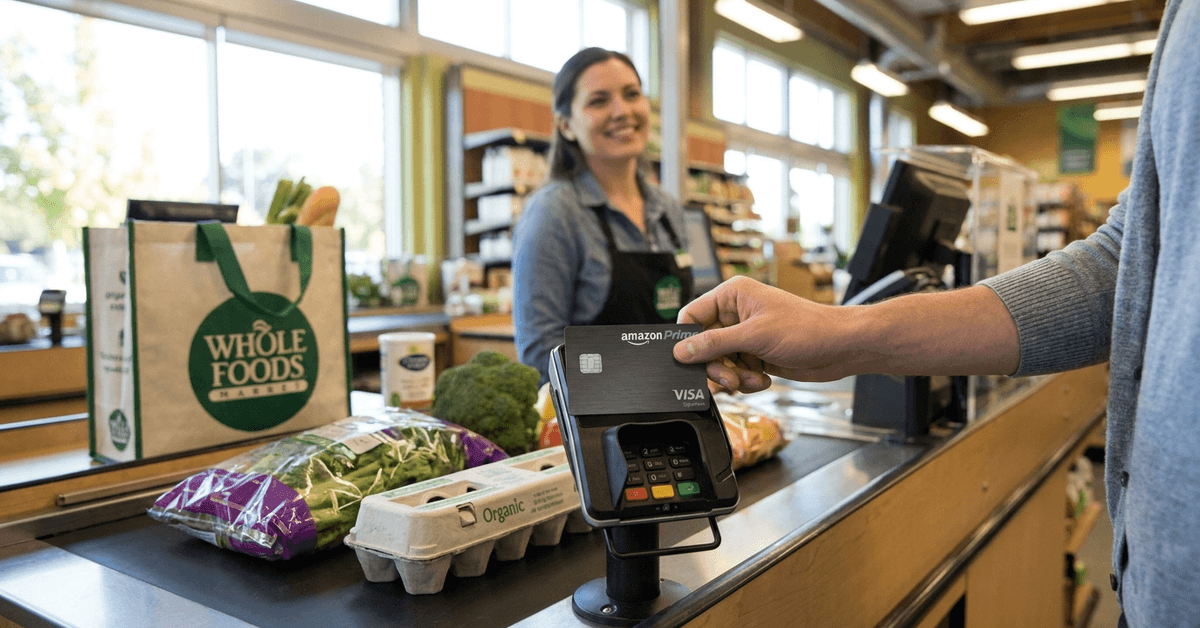
The Amazon Prime Visa offers 5% back on every Amazon and Whole Foods purchase. That rate vanishes the moment a Prime membership lapses, dropping to 3% overnight.
Review sites quote that 5% figure and move on. Few bother calculating how the annual Prime membership fee chips away at the cashback for moderate spenders.
This breakdown targets Amazon shoppers spending around $250 a month on the platform, trying to decide if Chase's card math works in their favor.
The 5% Rate Has a Membership Fee Baked In
Every review of the Amazon Prime Visa leads with the same number: 5% back at Amazon and Whole Foods. Clean and simple. A shopper spending $3,000 a year on Amazon earns $150 in rewards without doing anything special.
But that 5% rate is conditional on an active Prime membership. Lose Prime or let it lapse, and Chase drops the Amazon earning rate to 3% automatically.
The card itself carries no annual fee, but Prime runs $139 per year as of 2025. That cost is woven into the equation whether card reviews mention it or not.
The Breakeven Spending Threshold
At $139 per year for Prime, a cardholder needs to earn at least that much in Amazon cashback to justify the membership on rewards alone. At the 5% rate, that means spending $2,780 per year on Amazon, or about $232 per month. Anything below that, and the Prime fee outpaces the card's earnings.
A shopper spending $150 per month on Amazon earns $90 per year. After the $139 Prime cost, the net return is negative $49. The 5% rate is real. The math underneath it is less generous than it looks for lighter spenders.
Plenty of people pay for Prime regardless of the card. Shipping speed and Prime Video carry their own value. But if the card is the reason someone keeps Prime active, the breakeven calculation matters a lot.
Amazon Prime Visa Rewards: What Each Dollar Earns
The earning structure goes beyond Amazon. Chase built a tiered system that covers common spending categories, though the rates outside Amazon are moderate at best.
Earning Categories Beyond Amazon
The 5% rate applies only to Amazon.com and Whole Foods Market purchases. The card earns 2% back at restaurants, gas stations, and drugstores. Everything else earns 1%.
That 2% tier is fine but unremarkable. Cards like the Chase Freedom Unlimited pay 3% on dining and drugstores with no membership requirement. The 1% catch-all rate lags behind most flat-rate options on the market in 2026.
Redemption: Checkout vs Statement Credit
Amazon points can be redeemed in a few ways, and the method chosen affects how easy it is to track real returns.
- At Amazon checkout: Apply points directly during purchase, no minimum redemption required
- Statement credit: Redeem through Chase's portal against the card balance
- Gift cards: Convert to Amazon gift cards through the rewards portal
I would pick statement credits over checkout redemption through Chase for one reason: spending points at Amazon checkout makes it easy to lose track of how much cashback the card generates each month.
Statement credits hit the Chase account directly, and the paper trail stays cleaner for budgeting.
Chase's 5/24 Rule and the Card Slot That Costs More Than 5%
Chase enforces a policy called 5/24: if a person has opened five or more credit cards from any issuer in the past 24 months, Chase will deny most new applications automatically. The Amazon Prime Visa counts toward that cap.
I think anyone planning to pursue Chase's travel cards should skip the Amazon Prime Visa entirely. A Sapphire Preferred sign-up bonus alone can run 60,000 to 80,000 points, worth $750 or more toward travel redemption. The Freedom Flex offers a $200 sign-up bonus and 5% rotating categories that occasionally include Amazon anyway. Burning one of five available Chase slots on a card that locks rewards into a single retailer is a bad trade for anyone building a broader Chase portfolio.
Most card review sites treat the Amazon Visa as a standalone product. That framing ignores the opportunity cost. Each Chase approval occupies a spot that cannot be used again for 24 months. A $150-per-year Amazon cashback return looks small next to a travel card sign-up bonus worth five times more.
Who Should Use That Slot
The Amazon Prime Visa makes financial sense for someone who already has Prime, spends $300 or more per month on Amazon and Whole Foods, and has no plans to apply for other Chase cards soon. That profile is narrower than the card's marketing suggests.
Someone juggling two or three Chase applications in a 24-month window should treat each slot like a limited resource. The Amazon card's earning rate is attractive on paper, but it competes against cards with larger bonuses and broader earning potential.
Amazon Prime Visa vs Flat-Rate Cashback Cards
The comparison below puts the Amazon Prime Visa against three popular alternatives across the same criteria.
| Feature | Amazon Prime Visa | Chase Freedom Unlimited | Discover it Cash Back | Capital One Quicksilver |
|---|---|---|---|---|
| Amazon/Whole Foods Rate | 5% | 1.5% | 5% (rotating, when active) | 1.5% |
| Dining | 2% | 3% | 1% | 1.5% |
| Gas Stations | 2% | 1.5% | 1% | 1.5% |
| All Other Purchases | 1% | 1.5% | 1% | 1.5% |
| Annual Fee | $0 (Prime required) | $0 | $0 | $0 |
| Foreign Transaction Fees | None | None | None | None |
The Chase Freedom Unlimited beats the Amazon card in every non-Amazon category. For someone whose spending is spread across multiple retailers, the Freedom Unlimited's flat 1.5% with a 3% dining rate will likely return more total cashback per year.
Applying for the Amazon Prime Visa Through Chase
The application process runs through Amazon's credit card page while logged into a Prime account. Chase handles the credit decision, and most applicants hear back within minutes.
Credit Score and Eligibility Requirements
Chase typically approves applicants with a credit score of 670 or higher. A U.S. Social Security number and current Prime membership are both required.
There is no published minimum income threshold, but Chase pulls a hard credit inquiry during the application.
The eligibility requirements break down like this:
- Active Amazon Prime membership at the time of application
- U.S. residency and a valid Social Security number
- Good to excellent credit history, generally FICO 670+
- No more than four new credit cards opened in the past 24 months (the 5/24 rule)
Students and first-time credit users may face tougher odds. Chase tends to favor established credit histories, and thin credit files often result in denials or requests for additional documentation.
Approval Timeline and Digital Card Access
Some applicants receive a digital card number immediately after approval, usable for Amazon purchases before the physical card arrives. The physical card ships through Chase and typically arrives within 7 to 10 business days.
If the application requires manual review, the timeline stretches. Chase may ask for income verification or additional identification, which can add a week or more to the process.
Purchase Protection and Security on the Amazon Prime Visa
Chase bundles several protections with this card at no extra cost. Zero-liability coverage for unauthorized charges is standard, along with real-time fraud monitoring. For a no-fee card, the security package is strong.
Extended Warranty and Damage Coverage
Purchases made with the card are eligible for purchase protection against damage or theft for a limited period after purchase. Chase also offers an extended warranty benefit that can add up to one extra year beyond the manufacturer's warranty on eligible items.
I find the extended warranty perk underrated on a card people primarily use for electronics through Amazon. A $400 tablet or a $600 pair of noise-canceling headphones gets an extra year of coverage at zero cost. The Chase Visa Signature benefits page lists full terms and claim procedures.
The no foreign transaction fee policy also makes this card usable abroad. The base 1% rate applies to international purchases, so it works as a backup travel card but not a primary one.
Questions People Ask About the Amazon Prime Visa Card
These are the questions that come up most often when people research this card, with answers that go a step past the surface-level response.
- Q: Does the Amazon Prime Visa charge an annual fee?
The card itself has no annual fee. But the 5% cashback rate requires an active Prime membership, which costs $139 per year as of 2025. If Prime lapses, the Amazon rate drops to 3%, and the card works more like a basic cashback option. - Q: Can I use Amazon Prime Visa rewards outside of Amazon?
Yes. Points can be redeemed as a statement credit through Chase, converting them to cash against the card balance. Gift card redemption is also available through the Amazon portal for those who prefer it. - Q: What credit score do I need for the Amazon Prime Visa?
Chase recommends a score of 670 or higher, though approval depends on the full credit profile. Thin credit files and recent Chase applications under the 5/24 rule can lead to denial even with a qualifying score. - Q: Is the Amazon Prime Visa worth it if I only spend $100 a month on Amazon?
At $100 per month, the card earns $60 in Amazon cashback per year. If Prime is kept solely for the card, the $139 membership fee wipes out the rewards and then some. The card pairs better with higher Amazon spending or with shoppers who already pay for Prime for other reasons. - Q: Does the Amazon Prime Visa work internationally?
The card charges no foreign transaction fees, so it is usable abroad without penalty. The base 1% rate applies to international purchases, which makes it a decent backup card for travel but not a first choice over a dedicated travel rewards card.
Conclusion
The Amazon Prime Visa pays well for heavy Amazon shoppers who already subscribe to Prime for shipping and streaming. Moderate spenders should run the breakeven math before applying, because the 5% rate costs more than $0 to access.
Chase's 5/24 rule adds a hidden opportunity cost that rarely appears in card reviews but affects future applications. A flat-rate cashback card may quietly outperform the Amazon Visa for anyone whose spending is spread across multiple retailers.